The Collapse Beneath the Surface: What Happens to US Coastal Ecosystems When Their Largest Predators Disappear
For decades, fisheries managers and marine ecologists have understood, in broad strokes, that removing a top predator from an ecosystem carries consequences. What has become increasingly apparent—through field research, long-term monitoring, and a growing body of trophic cascade studies—is that those consequences are far stranger, far more interconnected, and far more resistant to correction than conventional management frameworks have historically acknowledged.
Along American coastlines, from the Gulf of Maine to the Gulf of Mexico to the kelp-fringed shores of the Pacific, the disappearance of apex fish species is not simply a story about declining catch numbers. It is a story about the fundamental reorganization of marine communities—one that is still unfolding in ways that challenge scientists and conservationists alike.
The Architecture of Predation
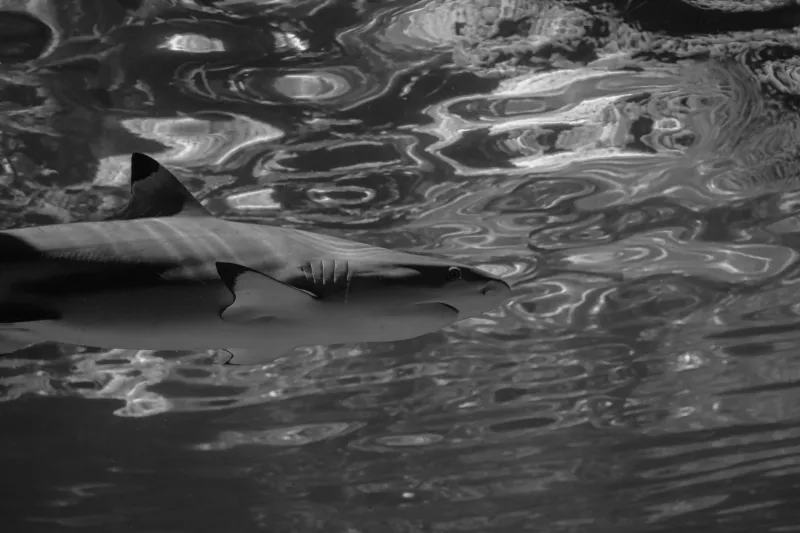
Apex predatory fish—species such as large coastal sharks, Atlantic bluefin tuna, goliath grouper, and Pacific lingcod—function as more than hunters within their ecosystems. They regulate the behavior, distribution, and population dynamics of the species beneath them in the food web. This regulatory role is known as a trophic cascade, and its disruption can initiate sequences of ecological change that bear little resemblance to the original disturbance.
Research published over the past two decades has documented how the severe depletion of large sharks along the US Atlantic coast contributed to explosive increases in cownose ray populations. Those rays, freed from significant predation pressure, dramatically intensified their grazing on bivalve beds—scallops, clams, and oysters—contributing to the near-collapse of century-old shellfishing industries in North Carolina and the Chesapeake Bay region. The loss of a shark was, in practical terms, also the loss of a shellfish population. That indirect linkage was not anticipated in the management models of the time.
This is the central complexity of apex predator loss: the ecological damage rarely announces itself where the predator once lived.
Secondary Extinctions and the Species We Didn't Know Were at Risk
Perhaps the most unsettling dimension of trophic cascades is the phenomenon of secondary extinction—the disappearance of species that were never directly targeted by fishing or habitat destruction, but whose survival depended on ecological relationships maintained by the predator now gone.
In the Gulf of Mexico, the dramatic reduction of large grouper and snapper populations has contributed to a restructuring of reef communities in ways that extend well beyond the fish themselves. As mesopredators—mid-level carnivores such as smaller snappers and grunts—have proliferated in the absence of larger competitors and predators, their intensified grazing pressure on invertebrate populations has altered the reef substrate itself. Certain sponge species, which provide shelter and filtration services for dozens of smaller reef organisms, have declined in areas where mesopredator densities are highest. Species that were never commercially harvested, never listed as threatened, and never the subject of targeted conservation efforts are quietly disappearing as a downstream consequence of decisions made at the top of the food web.
The scientific literature refers to this as an "extinction debt"—a delayed accounting for ecological disruption whose full cost has not yet been paid.
Behavioral Ecology and the Landscape of Fear
The effects of apex predator loss extend even into the behavior of species that remain abundant. Marine ecologists have increasingly recognized the importance of what is sometimes called the "landscape of fear"—the spatial and behavioral patterns that prey species adopt in response to predation risk. When that risk diminishes, prey animals change where they feed, how long they remain in exposed habitats, and how much energy they expend on vigilance.
Off the coast of the Pacific Northwest, studies of lingcod and their prey have suggested that reductions in large predatory fish alter the foraging behavior of rockfish and smaller groundfish species in ways that increase grazing pressure on certain invertebrate communities. The prey, no longer constrained by the threat of predation to specific refugia, range more freely and feed more intensively. The result is a diffuse but measurable restructuring of benthic communities—one that plays out not through predation itself, but through its absence.
This dynamic complicates restoration planning considerably. Restoring predator populations does not instantly restore the behavioral ecology of the ecosystem. Prey species that have spent generations without significant predation pressure may not immediately revert to historical behavioral patterns, even when predators return.
The Messy Reality of Recovery
Restoration frameworks for apex predatory fish species—whether through fishing moratoriums, marine protected areas, or active stock enhancement programs—frequently operate on the assumption that population recovery will translate, in reasonably predictable fashion, into ecosystem recovery. The evidence from US coastal systems suggests this assumption deserves scrutiny.
Goliath grouper, once nearly extirpated from Florida waters, have shown meaningful population increases following federal protections enacted in 1990. Yet the ecological role they once played has not simply reasserted itself. Decades of absence allowed mesopredator species to restructure reef communities in their own image. When goliath grouper returned, they entered a system that had reorganized around their absence, and the cascading effects of their reappearance—including significant pressure on spiny lobster and other commercially important invertebrates—generated new conflicts between conservation goals and fishing industry interests.
Recovery, in other words, does not mean restoration to a prior state. It means the introduction of a new variable into an already-altered system, with outcomes that are difficult to predict and often contested.
Toward More Honest Frameworks
The scientific community studying US coastal trophic dynamics has, in recent years, called for management approaches that more explicitly account for ecosystem-level interactions rather than treating individual species in isolation. Ecosystem-based fisheries management, long discussed as an aspirational standard, has seen incremental adoption by agencies including NOAA Fisheries, but the gap between principle and implementation remains substantial.
Part of the challenge is institutional. Stock assessments, regulatory frameworks, and political negotiations have historically been structured around single-species models. Integrating the complexity of trophic cascades—with their indirect effects, time lags, and behavioral dimensions—into enforceable policy requires not only scientific consensus but administrative and political will that has proven difficult to sustain.
Part of the challenge is also epistemic. Trophic cascades are, by their nature, difficult to predict in advance and difficult to attribute with certainty after the fact. The cownose ray and scallop connection took years of research to establish convincingly. Secondary extinctions often go undetected until population declines are already severe. Science, in this domain, is frequently catching up to ecological reality rather than anticipating it.
What the Data Are Telling Us
What is clear, from the accumulating weight of research conducted along American coastlines, is that the loss of apex predatory fish initiates changes that are deeper, stranger, and more durable than early fisheries science anticipated. The ecosystems that emerge from these collapses are not simply impoverished versions of what came before. They are reorganized systems, operating under different rules, supporting different communities, and resisting recovery in ways that reflect the full complexity of ecological interdependence.
For marine scientists, conservationists, and policymakers engaged with US ocean management, this reality demands a more honest reckoning with what predator loss actually means—and what it will take, in time, resources, and scientific humility, to begin undoing it.