Adrift and Imperiled: The Sargasso Sea's Role in American Fisheries and the Science Wars Surrounding It
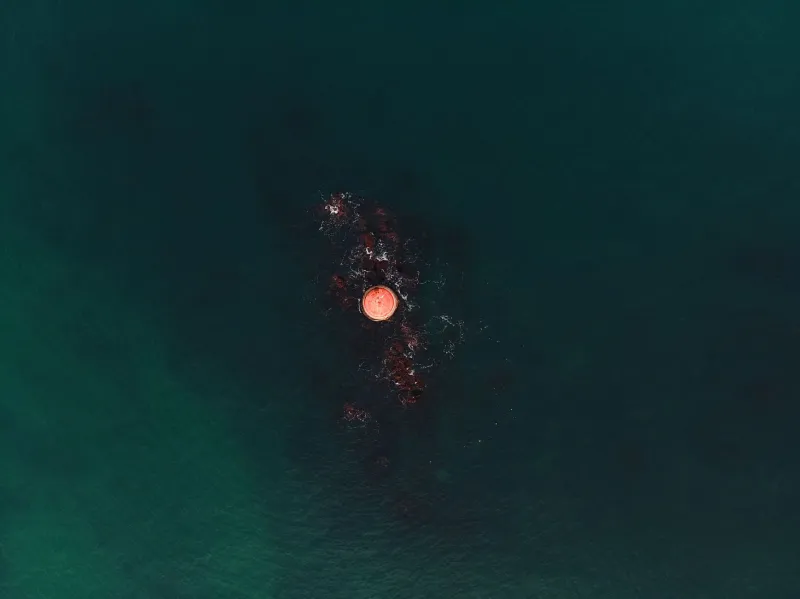
There is no coastline that defines the Sargasso Sea. No nation claims its waters as sovereign territory, no beach marks its edge, and no river empties into it. Instead, this elliptical expanse of the North Atlantic — roughly the size of the continental United States — is bounded entirely by ocean currents: the Gulf Stream to the west, the North Atlantic Current to the north, the Canary Current to the east, and the North Atlantic Equatorial Current to the south. It is, by nearly every conventional measure, an ocean desert. Yet beneath its surface, and within the floating mats of golden-brown Sargassum seaweed that give it its name, some of the most consequential biological events in the Western Atlantic unfold each year — events whose reverberations reach directly into American harbors, fishing communities, and regulatory chambers.
A Nursery Without Borders
For marine biologists, the Sargasso Sea occupies a peculiar position in the scientific imagination: simultaneously well-known and deeply mysterious. Its role as the sole known spawning ground for the American eel (Anguilla rostrata) has been recognized for over a century, yet no scientist has ever directly observed an American eel spawning in the wild. Adults migrate thousands of miles from freshwater rivers and coastal estuaries — from the Connecticut River to the Chesapeake Bay — to reach the Sargasso's warm, saline depths, deposit their eggs, and die. The larvae then drift northward on ocean currents for months before metamorphosing and recruiting into US coastal systems. The entire reproductive cycle exists, in essence, as a scientific inference drawn from circumstantial evidence.
The Atlantic bluefin tuna (Thunnus thynnus) presents a different but equally compelling case. The western Atlantic population, which supports a commercially and culturally significant US fishery, converges on the Sargasso Sea and the Gulf of Mexico each spring to spawn. Larval bluefin are extraordinarily sensitive to temperature fluctuations and prey availability during their earliest life stages, and the conditions they encounter in these open-ocean nurseries largely determine the strength of each year class entering the broader population. Weak recruitment years, researchers have noted, often trace back not to overfishing alone but to oceanographic conditions during those critical larval windows.
Beyond eels and tuna, the Sargassum mats themselves function as habitat for a remarkable assemblage of juvenile fish, invertebrates, and sea turtles — including loggerheads and young-of-the-year mahi-mahi — that later disperse throughout the western Atlantic. This floating architecture is not incidental. It is, for many species, the difference between surviving early life and not.
Where the Science Fractures
It is precisely because the Sargasso Sea sits at the intersection of so many biological dependencies that the scientific debates surrounding it have grown increasingly contentious. The disagreements are not trivial academic disputes; they carry direct implications for US fisheries management, international conservation diplomacy, and climate policy.
One central controversy involves the expanding and shifting distribution of Sargassum itself. Since roughly 2011, massive accumulations of pelagic Sargassum — now referred to as the Great Atlantic Sargassum Belt — have begun forming in the tropical Atlantic and inundating Caribbean and Gulf of Mexico coastlines with unprecedented frequency. Some researchers argue that nutrient enrichment from Amazon River runoff, amplified by land-use changes in South America, has fundamentally altered the biology of Sargassum in ways that may be devaluing the traditional Sargasso Sea nursery. Others maintain that the core Sargasso habitat remains relatively intact and that the Caribbean blooms represent a distinct phenomenon. The distinction matters enormously: if the nursery function of the Sargasso is degrading, the downstream consequences for species like American eel — already listed as endangered by the International Union for Conservation of Nature — could be severe and largely invisible to managers focused on coastal harvest pressure.
A second fault line concerns the relative contribution of open-ocean conditions versus nearshore and freshwater factors in driving American eel population declines. Eel populations along the US East Coast have fallen dramatically over the past several decades, prompting regulatory responses at the state and federal level. However, attributing causation remains deeply contested. Some scientists emphasize in-river barriers such as dams and turbines as the primary driver of recruitment failure. Others point to degraded oceanic conditions during larval transport phases — including changes in Gulf Stream dynamics linked to broader Atlantic circulation shifts — as underappreciated variables. The practical stakes are significant: management resources directed toward dam removal and fish passage may be insufficient if the bottleneck lies thousands of miles offshore in waters beyond any US agency's jurisdiction.
The Governance Gap
The Sargasso Sea's political status compounds every scientific uncertainty. Because it falls almost entirely within international waters, no single nation bears responsibility for its stewardship. The Sargasso Sea Commission, established in 2014 through the Hamilton Declaration, represents a voluntary coalition of governments committed to the sea's protection — but the commission lacks binding regulatory authority and operates largely through advocacy and scientific coordination. The United States is a signatory, but American fisheries managers have limited direct leverage over what occurs in these waters.
This governance gap becomes particularly acute when considering longline fishing pressure in the open Atlantic. Bluefin tuna larvae share the Sargasso with juvenile swordfish, sharks, and other species, all of which may be incidentally captured by distant-water fleets operating under varying degrees of international oversight. Quantifying the impact of this bycatch on recruitment is methodologically challenging, and the data required to do so rigorously are often proprietary or inconsistently reported across flag states.
Marine policy scholars have increasingly argued that the Sargasso Sea represents a test case for high-seas governance more broadly — a place where the inadequacy of existing international frameworks is made visible by the concrete biological consequences flowing toward the coastlines of specific nations. For the United States, those consequences arrive in the form of eel recruitment failures, tuna year-class variability, and shifts in the juvenile fish communities that sustain broader food web dynamics along the Eastern Seaboard.
What the Debates Demand
The scientific controversies surrounding the Sargasso Sea are not, at their core, arguments about whether the region matters. On that point, there is near-universal agreement. What remains genuinely contested is how multiple stressors — warming, nutrient loading, fishing pressure, circulation changes — interact across vast spatial scales to produce the recruitment signals that eventually appear in US coastal surveys.
Resolving these questions will require sustained, coordinated research efforts that span disciplines and national boundaries. Advances in larval tracking technology, ocean observing systems, and environmental DNA sampling offer new methodological avenues, but only if the scientific community and funding agencies treat the open ocean as integral to the fisheries systems they are charged with understanding.
For marine biologists and oceanographers engaged in this work, the Sargasso Sea offers something rare: a place where foundational ecological questions remain genuinely open, where the answers carry immediate management relevance, and where the science itself is still unfolding in real time. That combination of uncertainty and consequence is precisely what makes it, for better or worse, ground zero for some of the most important debates in contemporary marine science.