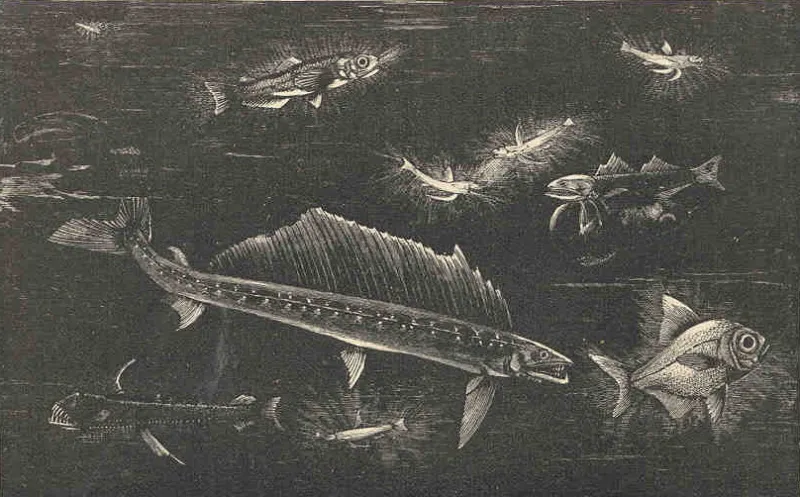
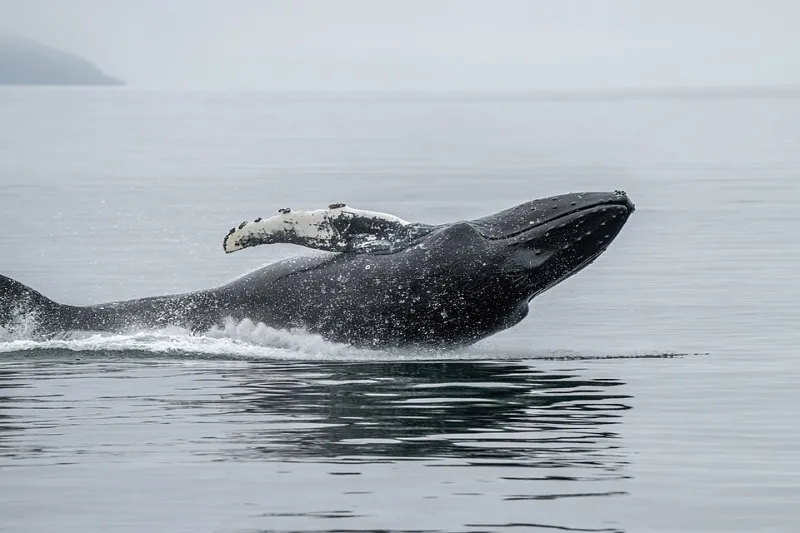
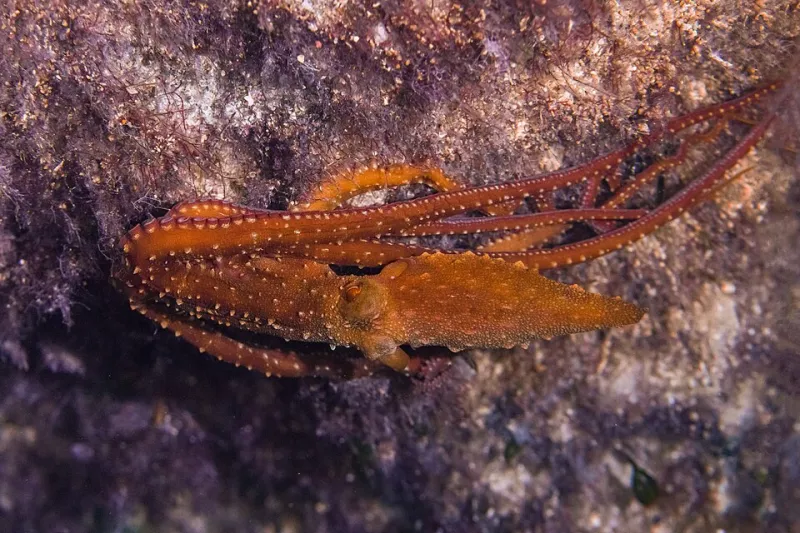
Ascending from the Deep: What Mesopelagic Predators Drifting Toward US Coastlines Are Telling Us About a Changing Ocean
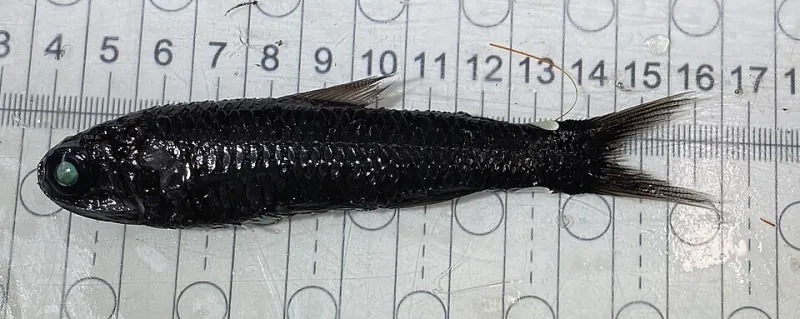
Photo: HulloThere, CC BY 4.0, via Wikimedia Commons
For generations, commercial fishers working the continental shelves of the Pacific and Atlantic coasts have operated with a fairly stable mental map of which species belong where. Groundfish occupy the bottom. Pelagic species like tuna and mackerel roam the sunlit surface layers. And somewhere far below — beyond the reach of most gear, beyond the concern of most management plans — the mesopelagic zone hums with its own alien ecology. That mental map is becoming unreliable.
Reports from fishing vessels, acoustic surveys, and coastal research stations are accumulating evidence that species typically associated with the twilight zone — lanternfish, hatchetfish, bristlemouths, and a variety of deep-water squid — are appearing at shallower depths and in coastal regions where they were rarely documented before. The shift is subtle enough that it has not yet triggered formal regulatory responses, but among marine scientists who study vertical ocean structure, it is a development that commands serious attention.
What Is the Mesopelagic Zone, and Why Does It Matter?
The mesopelagic zone, sometimes called the twilight zone, extends from roughly 200 to 1,000 meters below the ocean surface. Sunlight penetrates this layer only in attenuated, blue-shifted form, insufficient for photosynthesis but enough to cast perpetual dim illumination. Pressure is crushing, temperatures are cold, and oxygen levels in parts of this zone are dramatically reduced — a phenomenon known as the oxygen minimum zone, or OMZ.
Despite these hostile conditions, the mesopelagic is extraordinarily productive in biomass terms. Global estimates suggest it may harbor between one and ten billion metric tons of fish alone, dwarfing the biomass of all commercially harvested fisheries combined. Lanternfish of the family Myctophidae are among the dominant vertebrates in this layer, performing diel vertical migrations — descending during the day to avoid visual predators and ascending toward the surface at night to feed on zooplankton.
This daily migration is not merely an ecological curiosity. It constitutes one of the ocean's primary mechanisms for transporting carbon from surface waters to the deep — a process central to the biological carbon pump. When mesopelagic organisms consume carbon-rich prey near the surface and then descend, they carry that carbon with them, effectively sequestering it away from the atmosphere. Any disruption to the depth and timing of these migrations carries implications that extend well beyond fisheries management.
The Drivers of Vertical Displacement
Oceanographers have identified several interacting factors that appear to be pushing mesopelagic species into shallower waters along the US coastlines.
Expanding oxygen minimum zones. Warming ocean temperatures reduce the solubility of dissolved oxygen in seawater. Simultaneously, increased stratification limits the mixing that would otherwise replenish oxygen at depth. The result is a measurable expansion and shoaling of OMZs in the Pacific and, to a lesser degree, the Atlantic. Species that previously occupied stable depth ranges are being compressed upward as their oxygen thresholds are breached from below.
Thermal restructuring of the water column. The upper ocean is warming faster than deeper layers, sharpening the thermocline — the boundary between warm surface water and cold deep water. For species adapted to cold, dark conditions, this steepened gradient can effectively push their preferred thermal habitat closer to the surface in certain geographic regions, particularly along the US West Coast where upwelling dynamics interact with broader warming trends.
Prey field redistribution. Mesopelagic predators follow their food. If the zooplankton and micronekton communities on which lanternfish and hatchetfish depend are themselves shifting vertically in response to temperature and oxygen changes, their predators will follow. Recent acoustic surveys conducted off the California coast have detected anomalous scattering layers — the acoustic signature of dense aggregations of small organisms — at shallower depths than historical baselines would predict.
Altered stratification and mixing regimes. Changes in wind patterns and freshwater inputs along the US coastline are modifying the physical structure of the water column in ways that can create new niches at intermediate depths, making shallower waters more hospitable to species that would previously have found them physiologically uninhabitable.
Encounters with Commercial Fisheries
For fishers working the continental slope from Alaska to the Gulf of Mexico, the practical consequences of this shift are beginning to surface — sometimes literally. Trawl surveys conducted by NOAA's Northwest Fisheries Science Center have reported increased bycatch of myctophid species at depths that fall within the operational range of commercial gear targeting Pacific hake and rockfish. On the East Coast, similar incidental catches have been noted in mid-Atlantic survey trawls.
The immediate economic impact of these encounters is modest; lanternfish and hatchetfish are not commercially targeted in the US, and most are discarded. But the ecological implications of their presence in shallower food webs are considerably more significant. These species serve as critical forage for a wide range of commercially important predators, including albacore tuna, Pacific salmon, and various seabird species. Their unexpected availability at shallower depths could alter predator foraging behavior, prey switching dynamics, and ultimately the productivity of fisheries that managers currently model without accounting for mesopelagic inputs.
Implications for Marine Food Web Modeling
One of the deeper challenges this phenomenon poses is methodological. The stock assessment frameworks used by NOAA Fisheries and regional fishery management councils are built on decades of survey data and ecological assumptions that treat the mesopelagic zone as effectively separate from the coastal and shelf ecosystems they regulate. If that boundary is becoming porous — if energy and biomass are flowing between these strata in new ways — then existing models may be systematically misrepresenting the food web dynamics that underpin their projections.
Marine ecologists at institutions including Scripps Institution of Oceanography and the Woods Hole Oceanographic Institution have been advocating for the integration of mesopelagic ecology into broader ecosystem models for years. The emerging pattern of vertical displacement lends new urgency to that argument. Understanding how much mesopelagic biomass is available to surface predators, and under what oceanographic conditions that availability increases, is no longer an academic exercise — it is a prerequisite for accurate fisheries management in a warming ocean.
What the Research Community Is Watching
Several observational programs are now specifically designed to track vertical distribution changes in mesopelagic communities. The NOAA-funded California Current Ecosystem surveys use acoustic Doppler current profilers and net sampling to characterize scattering layer depth across seasons and years. Autonomous underwater gliders equipped with acoustic sensors are being deployed along the US Atlantic margin to build continuous records of deep scattering layer behavior.
The data these programs generate will be essential for separating genuine distributional shifts from natural interannual variability. The El Niño–Southern Oscillation cycle, for instance, is known to produce temporary shoaling of OMZs along the West Coast, and some of the anomalous mesopelagic encounters recorded in recent years may reflect cyclical oceanographic conditions rather than a permanent restructuring. Distinguishing between the two requires sustained observation over timescales that no single research cruise can provide.
A Zone That Can No Longer Be Ignored
The twilight zone has long occupied an ambiguous position in ocean governance — too deep for most regulatory frameworks, too vast to survey comprehensively, too poorly understood to model with confidence. The possibility that its inhabitants are being pushed upward into the ecosystems that management agencies do regulate represents a structural challenge to that convenient ambiguity.
For the marine biology and oceanography communities, the ascending presence of these deep-adapted species is less a crisis than a signal — one that carries information about oxygen dynamics, thermal gradients, and food web structure that surface-level monitoring alone cannot provide. Reading that signal accurately, and translating it into management frameworks capable of responding to a vertically reorganizing ocean, is among the more consequential scientific tasks now facing the US marine research community.