Where Rivers Surrender to the Sea: The Scientific Fault Lines Dividing America's Most Productive Coastal Zones
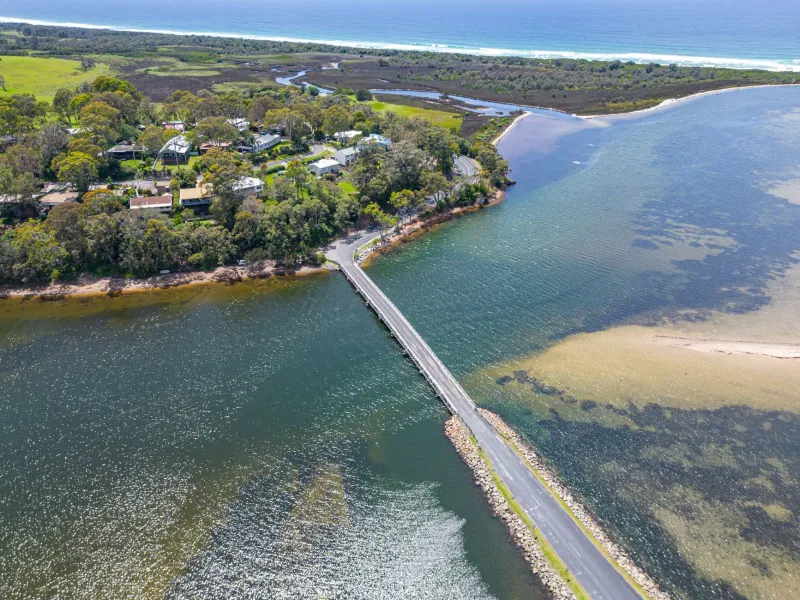
There is a moment, somewhere between the freshwater tributaries of the interior and the open saltwater beyond the continental shelf, where an estuary becomes something that defies easy categorization. It is not river, not ocean, not wetland in any singular sense. It is all of these simultaneously — and that ecological complexity is precisely what makes estuaries both irreplaceable and nearly impossible to manage by consensus.
Across the United States, estuaries generate an estimated 75 percent of the nation's commercial fish catch at some point in their life cycles. They filter pollutants, buffer coastlines against storm surge, sequester carbon, and support migratory bird populations that span entire hemispheres. Yet for all their acknowledged importance, these transition zones have become contested laboratories where marine biologists, hydrological engineers, fisheries managers, and climate scientists frequently find themselves working at cross-purposes — and where scientific uncertainty is routinely transformed into a policy weapon.
The Chesapeake Bay: Nitrogen, Nitrogen, Everywhere
The Chesapeake Bay, the largest estuary in the United States, has been the subject of federal and state restoration efforts for more than four decades. Its problems are well documented: agricultural runoff from the vast Pennsylvania and Virginia watersheds delivers enormous nitrogen and phosphorus loads that fuel hypoxic dead zones, suppress submerged aquatic vegetation, and destabilize the food web that once supported one of the most productive blue crab and oyster fisheries in the world.
But the science of what to prioritize in Chesapeake restoration has never been as unified as the political narrative surrounding it suggests. Nutrient reduction targets set under the EPA's Chesapeake Bay Total Maximum Daily Load framework have been contested by agricultural interests on one side and by marine ecologists who argue the targets remain insufficiently ambitious on the other. Meanwhile, a separate cohort of researchers has challenged the primacy of nutrient management altogether, pointing to evidence that sediment loading — not nitrogen alone — may be the more decisive factor governing light availability for underwater grasses.
The disagreement is not merely academic. It determines where hundreds of millions of dollars in restoration funding flow, and which stakeholder communities bear the cost of compliance. When scientific findings are genuinely uncertain, as they often are in complex estuarine systems, that uncertainty does not produce policy neutrality. It produces paralysis, or worse, selective citation by whichever interest group finds a particular study most convenient.
The Mississippi Delta: Engineering Against Nature
The situation at the Mississippi Delta presents a different but equally instructive case. Louisiana's coastal wetlands — much of which represent the terminal estuary of one of North America's great river systems — are disappearing at a rate that has few parallels in the modern world. Decades of levee construction, sediment diversion, and oil and gas extraction have severed the natural processes by which the delta once replenished itself.
Restoration science here is divided along a fundamental axis: large-scale sediment diversions that would redirect Mississippi River flows to rebuild land versus marsh creation projects that work with existing conditions rather than attempting to re-engineer hydrology. The diversion approach, backed by Louisiana's Coastal Master Plan and supported by a substantial body of geomorphological research, would introduce vast quantities of freshwater and sediment into estuarine zones currently adapted to saltwater conditions. For fisheries scientists and the communities that depend on brown shrimp and oyster harvests, this represents an existential threat — one documented by economic impact studies that the engineering-focused diversion advocates have frequently minimized.
What emerges from the Delta debate is a pattern recognizable across American estuary management: the scientists who study one ecosystem function tend to develop frameworks that treat other functions as secondary. Sediment geologists see land building as the paramount objective. Fisheries biologists see salinity gradients as the foundational variable. Climate adaptation researchers see carbon sequestration potential as the organizing principle. No single discipline has produced a framework capable of holding all of these priorities simultaneously — and political processes rarely wait for interdisciplinary consensus to mature.
San Francisco Bay: The Urban Estuary as Policy Microcosm
Perhaps no American estuary illustrates the collision of competing scientific priorities more vividly than San Francisco Bay. Surrounded by one of the nation's most economically powerful metropolitan regions, the Bay has been diked, filled, polluted, and partially restored over a century and a half of industrial use. Today it hosts a remarkable convergence of restoration ambitions that frequently operate in tension with one another.
Tidal wetland restoration projects aimed at enhancing carbon storage and providing flood protection buffers have expanded significantly in recent years, driven by climate adaptation funding and backed by robust ecological literature. Yet the same wetland restoration that climate scientists celebrate can, in certain configurations, alter the salinity and turbidity regimes upon which the Bay's native fish species — including the imperiled Delta smelt, whose habitat extends into the estuary — critically depend. Meanwhile, legacy contamination from mercury and other industrial pollutants creates a separate layer of scientific complexity: restored wetlands can, under certain conditions, mobilize methylmercury into the food web, raising questions that toxicologists and restoration ecologists have not fully resolved.
The result is a scientific community that broadly agrees on the value of estuarine restoration while disagreeing, sometimes sharply, on the methods, sequencing, and trade-offs that responsible restoration requires.
What Estuaries Reveal About the Limits of Consensus Science
The difficulties encountered at Chesapeake Bay, the Mississippi Delta, and San Francisco Bay are not failures of individual research programs. They reflect something more structural: the inherent challenge of applying disciplinary science to systems that are, by definition, transitional. Estuaries exist at the intersection of freshwater and marine processes, of natural dynamics and human modification, of local ecology and continental-scale hydrology. They resist the kind of clean experimental design that generates unambiguous management recommendations.
This does not mean that science has nothing to offer estuary management — it plainly does, and the restoration gains achieved in all three of these systems over recent decades are genuine. But it does suggest that the scientific community, policymakers, and the public would benefit from greater transparency about the nature of estuarine knowledge: its depth in some areas, its fragmentation across disciplines, and the degree to which value choices — about which ecosystem services matter most, and to whom — are embedded in seemingly technical decisions.
Estuaries will continue to be contested because they are contested in the most fundamental sense: multiple communities, human and non-human alike, make legitimate and incompatible claims upon them. The most honest contribution that ocean science can make to their management may not be a unified restoration blueprint, but a clearer accounting of what we know, what we do not, and what no amount of data can decide for us.