Beneath the Mud: How Sediment Microbes Are Silently Governing the Fate of America's Coastal Fisheries
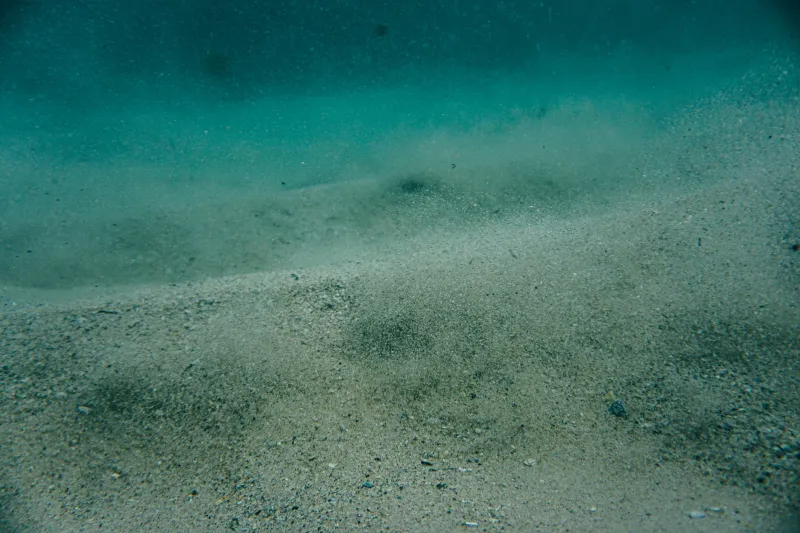
For decades, fisheries managers along the US coastline have trained their attention upward — toward spawning aggregations, predator-prey dynamics, and water column chemistry. The seafloor, by contrast, has largely been treated as a passive backdrop: something fish rest upon rather than something that actively shapes their abundance. A growing body of research is dismantling that assumption with considerable force.
The microbial communities living within coastal sediments — bacteria, archaea, fungi, and a host of protists — are now understood to operate as the primary regulators of nutrient availability across some of America's most commercially significant fishing grounds. What happens in the mud, it turns out, does not stay in the mud.
The Seafloor as a Biochemical Engine
Benthic microbial communities carry out a suite of biogeochemical transformations that would be difficult to overstate in their ecological importance. Chief among these is the cycling of nitrogen, an element that functions as a fundamental currency of marine productivity. Through processes including nitrification, denitrification, and anaerobic ammonium oxidation — commonly called anammox — sediment microbes act as both sources and sinks for the dissolved inorganic nitrogen that phytoplankton depend upon.
When these microbial pathways function efficiently, the result is a regulated, sustained release of bioavailable nutrients into the water column above. Phytoplankton bloom in response, zooplankton follow, and the food web builds upward toward the fish species that support commercial and recreational industries worth tens of billions of dollars annually along American coastlines. When those pathways are disrupted — by hypoxia, sediment disturbance, temperature shifts, or chemical contamination — the consequences propagate through the entire system in ways that are difficult to predict and even harder to reverse.
Researchers at institutions including the Woods Hole Oceanographic Institution and the Virginia Institute of Marine Science have been mapping these microbial networks in estuaries, continental shelf sediments, and nearshore environments with increasing resolution. What they are finding challenges the traditional view of the seafloor as biologically inert between disturbance events.
Nutrient Spiraling and the Fate of Coastal Productivity
One of the more illuminating concepts to emerge from recent benthic research is that of nutrient spiraling — the idea that elements like nitrogen and phosphorus do not simply sink to the seafloor and remain there, but instead cycle repeatedly between sediment and water column in patterns shaped largely by microbial activity. The tightness of that spiral, meaning how efficiently nutrients are retained and recycled within a given coastal system, has direct implications for how productive that system can be.
In well-functioning estuaries such as portions of the Chesapeake Bay and Puget Sound, tight nutrient spirals support robust phytoplankton communities that sustain everything from juvenile striped bass to commercially harvested bivalves. In systems where microbial communities have been degraded — often through chronic oxygen depletion driven by nutrient loading from agricultural runoff — spiraling loosens. Nutrients are either buried in anoxic sediments where they become unavailable, or they are released in pulses that fuel harmful algal blooms rather than productive food webs.
The distinction between these outcomes often comes down to which microbial guilds are active and in what proportions. Sulfate-reducing bacteria, for instance, dominate in low-oxygen sediment environments and tend to produce hydrogen sulfide — a compound toxic to many benthic invertebrates and fish larvae — rather than the bioavailable nitrogen compounds that support productivity. Shifts in microbial community composition, even subtle ones, can therefore tip a coastal system from productive to degraded.
What Current Fisheries Management Is Missing
Despite their centrality to coastal productivity, sediment microbial communities remain largely absent from the frameworks that govern US fisheries management. Stock assessments, habitat evaluations, and environmental impact analyses rarely incorporate direct measures of benthic biogeochemical function. The reasons are partly practical — sampling and analyzing sediment microbial communities at management-relevant scales is technically demanding and expensive — but they also reflect a disciplinary gap between microbial ecology and applied fisheries science that has been slow to close.
Several researchers working in this space have argued that this gap represents a meaningful blind spot. A fishery that appears healthy by conventional metrics — adequate spawning biomass, acceptable bycatch rates, stable water column chemistry — may nonetheless be operating on a compromised nutrient foundation if its underlying sediment microbiology has been degraded. The decline, when it comes, may appear sudden and puzzling to managers who have not been monitoring the processes that were quietly failing beneath their feet.
This concern is particularly acute in heavily fished and nutrient-impacted coastal systems. The Gulf of Mexico, where hypoxic conditions driven by Mississippi River nutrient discharge affect thousands of square miles of seafloor each summer, represents perhaps the most visible example. But similar dynamics are playing out at smaller scales in New England estuaries, Pacific Northwest fjords, and the lagoonal systems of the Southeast Atlantic coast.
Emerging Tools and Research Directions
The scientific community is not standing still on this problem. Advances in environmental genomics — particularly high-throughput sequencing of sediment DNA and RNA — have made it possible to characterize microbial community composition and metabolic activity at a level of detail that was unimaginable two decades ago. Metatranscriptomic approaches, which capture the actual gene expression patterns of sediment microbial communities, can now reveal which biogeochemical pathways are active in real time, providing a functional window into sediment health that complements traditional chemical measurements.
Coupled with improved benthic flux chambers and in situ sensor arrays, these tools are enabling researchers to construct more complete pictures of how sediment microbiology responds to environmental stressors and how those responses translate into changes in water column nutrient availability. Some research groups are exploring whether microbial community metrics could eventually be incorporated into early warning systems for fishery productivity declines — a prospect that would represent a genuine integration of microbial ecology into applied fisheries science.
There is also growing interest in whether sediment microbial communities can be actively managed or restored. Experimental work on oyster reef restoration, for example, has documented measurable improvements in sediment nitrogen cycling as bivalve populations recover — suggesting that habitat restoration efforts may carry microbial co-benefits that amplify their effects on overall productivity.
A Call for Deeper Integration
The science of benthic microbiology has matured to the point where its relevance to fisheries management is no longer speculative — it is demonstrable. What remains is the harder work of building the institutional connections, monitoring frameworks, and management vocabularies that would allow this knowledge to inform practice at scale.
For the marine science community, that means sustaining investment in long-term benthic monitoring programs, developing standardized methods for assessing sediment biogeochemical function, and fostering genuine dialogue between microbial ecologists and the fisheries managers who need their insights. For the broader conservation community, it means recognizing that protecting the productivity of American coastal waters requires attention to the invisible as well as the visible — to the microbial architecture that underlies every fish stock, every spawning ground, and every coastal community that depends on a living sea.
The pipeline that moves nutrients from seafloor to fish is ancient, intricate, and largely microbial. Ignoring it has costs that are already becoming apparent in degraded fisheries across the country. Understanding it, and ultimately protecting it, may be among the most consequential investments American marine science can make.