The Catch Is Public. The Truth About It Isn't.
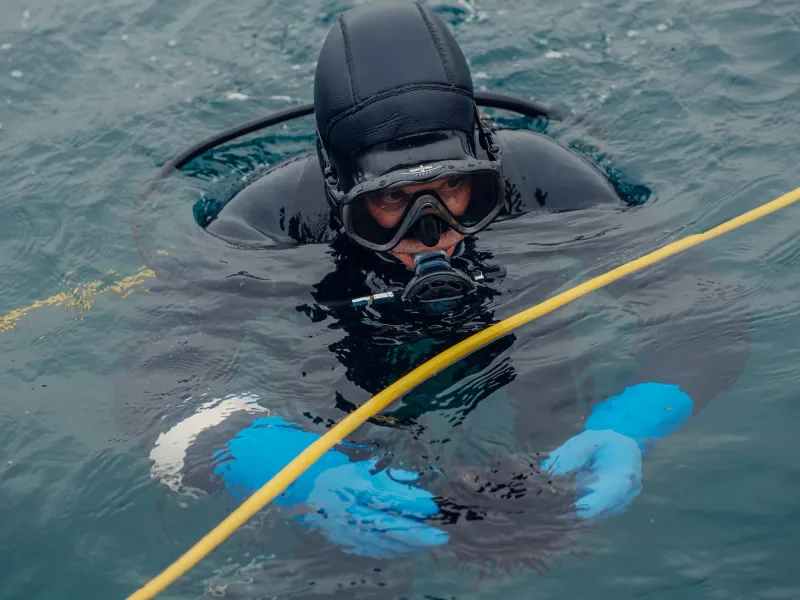
Photo: Department of the Interior. U.S. Fish and Wildlife Service. National Conservation Training Center. 10/1997-8888, Public domain, via Wikimedia Commons
The Magnuson-Stevens Act, the statute that governs nearly every fish landed in US federal waters, rests on a simple premise: the ocean's fish belong to the American public, and management decisions should follow the best available science. But there's an uncomfortable gap between that premise and the daily reality of how fishery information actually moves. The catch comes from public waters. The science is funded by public money. The data itself, however, is frequently anything but public.
The Transparency That Exists on Paper
To be fair, the US does better than most nations. Stock assessments are published. Council meetings are webcast. Landings summaries are downloadable. If you compare American disclosure to, say, the opacity of many international distant-water fleets, the contrast is genuinely favorable.
But 'better than the alternative' is a low bar, and it papers over real gaps. Vessel-level catch records, the finest-grained picture of who took what from where, are treated as confidential business information in most federal fisheries. Real-time bycatch reporting — the incidental capture of sea turtles, marine mammals, and undersized fish — typically surfaces in annual summaries, months or years after the fact, aggregated until individual events dissolve into averages. Quota transfers in catch-share programs, effectively a market in a public resource, often trade without a publicly accessible transaction record.
Why Aggregation Becomes Anonymity
Defenders of the status quo raise legitimate concerns. Individual vessel records can reveal fishing grounds; in a small fleet, disclosing catch by trip could identify operators and expose them to harassment. Privacy and safety at sea are not trivial considerations, and any reform has to take them seriously.
Yet the current system resolves the tension by defaulting to secrecy in almost every case, rather than by designing disclosure deliberately. Delayed, heavily aggregated data serves confidentiality perfectly — and serves accountability hardly at all. When a hot spot of protected-species interactions develops in a specific fishery, an annual regional average tells the public nothing until long after the season ends. When quota concentrates in fewer hands, a market operating on a public resource has no public ledger. These are not edge cases; they are structural features of how American catch data is handled.
What Genuine Openness Would Look Like
Real reform doesn't require naming individual vessels. It requires rethinking defaults, timeliness, and granularity:
- Timeliness. Bycatch and discards should be reported on weeks-to-months timescales, not in documents published a year or more later. Near-real-time interaction hotspots are actionable; annual averages are archaeology.
- Spatial honesty. Aggregated but geographically resolved reporting — grid-cell level catch and bycatch with vessel identities withheld — would let researchers and the public see where impacts concentrate without exposing operators.
- A public quota ledger. Catch-share transfers create markets in a collectively owned asset. Recording those trades in an accessible registry, the way securities transactions are logged, is the minimum transparency such a market owes its owners.
- Machine-readable everything. Data trapped in PDF appendices is data that can't be checked at scale. Every published assessment should ship with its underlying tables in open formats.
Agencies will note, correctly, that some of this costs money and that regional data systems were built piecemeal over decades. That's true, and it's also an argument for fixing the architecture rather than defending it.
The Stakes for the Discourse
Marine Forum exists on a premise: that ocean science improves through open discussion. But discussion requires evidence, and evidence requires access. When the numbers that justify a quota decision, or that conceal a bycatch problem, are available only to those inside the process, the public debate is reduced to competing assertions — and the side with access wins by default.
The ocean belongs to everyone. The record of what we take from it should, too.