The Ocean Has a Voice. US Fisheries Management Isn't Listening.
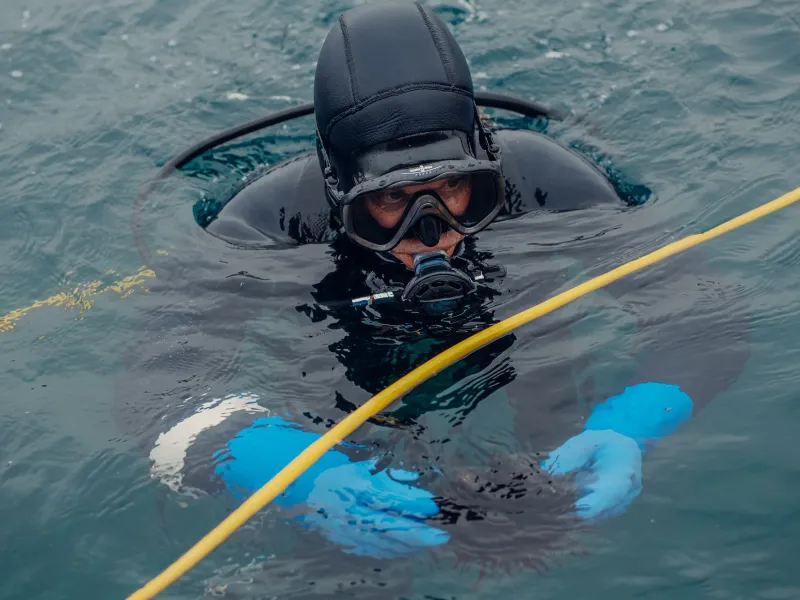
If you were to lower a hydrophone into the waters off the coast of Massachusetts on a spring evening, what you would hear might surprise you. Beneath the surface, Atlantic cod produce low, repetitive grunts during spawning aggregations. Humpback whales push long, complex song sequences across dozens of miles. Snapping shrimp generate a near-continuous crackle across rocky substrates. Toadfish hum from beneath rocks in estuarine shallows. The ocean, long mythologized as a realm of silence, is in fact one of the most acoustically rich environments on Earth.
It is also becoming one of the noisiest—on human terms. Shipping traffic, sonar operations, seismic surveys, pile driving for offshore construction, and recreational vessel noise have collectively transformed the acoustic character of US coastal and offshore waters in ways that researchers are only beginning to fully measure. And the consequences for marine life, particularly for fish species that rely on sound for nearly every critical biological function, are increasingly difficult to dismiss.
Sound as Biology
To understand why ocean noise matters to fisheries, it is necessary to first appreciate how central acoustics are to the lives of fish. Unlike the stereotype of the silent, passive creature drifting through water, many fish species are highly active sound producers and receivers. Sound travels approximately four times faster in water than in air, making it far more efficient for underwater communication than visual or chemical signals across meaningful distances.
Fish use sound to coordinate spawning aggregations, establish territorial boundaries, warn conspecifics of predators, and navigate between habitat patches. Many larvae use the acoustic signatures of healthy reef or estuarine environments as settlement cues—essentially following the sound of a functioning ecosystem toward suitable habitat. When that acoustic environment is degraded or overwhelmed by anthropogenic noise, the informational content of the soundscape is corrupted, and the behaviors that depend on it begin to fail.
Dr. Rodney Rountree, a marine bioacoustician whose work has helped document the vocal repertoires of dozens of fish species in US waters, has described the situation plainly: "We've spent decades studying what fish eat, where they go, and how many there are. We've barely begun asking what they're saying to each other—or what happens when they can't hear the answer."
What the Research Is Revealing
The body of peer-reviewed literature on anthropogenic noise and fish behavior has expanded substantially over the past fifteen years, and the findings are consistent enough to demand serious policy attention.
Exposure to elevated noise levels—including those produced by commercial shipping and recreational vessels—has been shown to elevate cortisol concentrations in multiple fish species, triggering physiological stress responses that divert energy away from immune function, growth, and reproduction. Studies of Atlantic croaker and Gulf toadfish have demonstrated that chronic noise exposure reduces the amplitude and frequency of spawning calls, potentially impairing mate attraction in environments where acoustic recognition is the primary mechanism for reproductive coordination.
Migration is another area of documented concern. Research on Pacific salmon has indicated that noise from vessel traffic can mask the acoustic cues that juveniles use during river-to-ocean transitions and that returning adults may use when navigating nearshore environments. Given the already precarious status of multiple West Coast salmon runs, any additional disruption to migratory behavior represents a compounding stressor that current management models are not designed to account for.
Perhaps most underappreciated is the effect of noise on larval settlement. Studies conducted in coral reef systems—with implications for temperate reef-associated species in US waters—have shown that larvae exposed to degraded soundscapes are less likely to settle in appropriate habitat, leading to recruitment failures that can persist across multiple year classes.
The Policy Silence
Despite this accumulating evidence, marine soundscape health is conspicuously absent from the frameworks that govern US fisheries management. The Magnuson-Stevens Fishery Conservation and Management Act, the primary federal statute governing marine fisheries, makes no mention of acoustic habitat. Essential Fish Habitat designations—the regulatory mechanism through which critical ecological areas receive protection—focus almost exclusively on physical substrate characteristics and water quality parameters. Noise is not among them.
This omission is not entirely without explanation. Quantifying acoustic habitat quality is methodologically complex, and the causal pathways between noise exposure and population-level fisheries outcomes are difficult to establish with the statistical precision that regulatory frameworks typically demand. Shipping and offshore energy industries, whose operations are major contributors to underwater noise, also maintain substantial lobbying presence in the policy conversations that shape fisheries and ocean management.
But researchers in the field argue that the evidentiary bar being applied to acoustic impacts is inconsistently high. "We don't require proof of population collapse before we regulate water temperature or dissolved oxygen," notes Dr. Susan Parks, a bioacoustician at Syracuse University whose work has documented long-term changes in right whale call structure in response to ambient noise levels. "Why should acoustic habitat be held to a different standard?"
Regional Dimensions of a National Problem
The acoustic degradation of US waters is not uniform, and understanding its regional character is essential for building a credible management response.
The US Northeast, one of the most heavily trafficked shipping corridors in the world, presents acute challenges for species like Atlantic cod and haddock whose spawning vocalizations operate in frequency ranges directly overlapping with vessel noise. The Gulf of Mexico, home to extensive offshore oil and gas infrastructure, subjects resident red snapper and grouper populations to seismic survey noise during periods that sometimes coincide with spawning seasons. The Pacific Coast faces a combination of shipping noise from major container ports and increasing offshore wind development activity, with implications for rockfish species whose complex acoustic behaviors are still being characterized by researchers.
In each of these regions, fisheries management plans are developed and revised with virtually no reference to the acoustic environment. Stock assessments measure abundance and harvest pressure; they do not measure whether fish can hear each other well enough to reproduce effectively.
Building an Acoustic Dimension into Fisheries Policy
A number of researchers and conservation organizations are now actively making the case for integrating soundscape metrics into US fisheries and ocean management frameworks. The practical pathway involves several components.
First, expanding passive acoustic monitoring infrastructure—hydrophone arrays capable of continuous recording across key fisheries zones—would generate the baseline data needed to characterize acoustic habitat quality and detect deterioration over time. NOAA's existing hydrophone network, while valuable, covers a fraction of the area needed for comprehensive management application.
Second, Essential Fish Habitat designations should be expanded to explicitly include acoustic habitat characteristics, particularly in areas where species with known acoustic dependencies congregate for spawning or juvenile development. This would create a regulatory hook for evaluating noise-generating activities during environmental review processes.
Third, fisheries management councils should be required to consider acoustic impact assessments when evaluating activities likely to introduce significant noise into critical habitat zones. The framework for this already exists in other environmental regulatory contexts; applying it to fisheries management is a matter of political will rather than legal or technical impossibility.
The Cost of Continued Silence
American fisheries are managed with increasing scientific sophistication in many respects. Genetic stock identification, satellite tagging, and ecosystem-based modeling have all expanded the analytical toolkit available to managers. Yet the acoustic dimension of marine ecosystems—arguably as fundamental to the functioning of fish populations as water temperature or prey availability—remains a blind spot of remarkable persistence.
The ocean is speaking. The question is whether the institutions charged with protecting its living resources are prepared to listen.