Scraping the Seafloor for Profit: The Phosphate Extraction Rush Threatening America's Pacific Fisheries
For most Americans, phosphate is a fertilizer ingredient — something that belongs to agricultural economics, not ocean policy. Yet beneath the surface of US Pacific waters, phosphate-rich seafloor deposits have quietly become the focus of a rapidly expanding extraction industry, one that marine scientists argue is advancing far ahead of the regulatory and ecological understanding needed to manage it responsibly. The consequences for benthic ecosystems — and the commercial fisheries that depend on them — may prove substantial, and largely irreversible on any human timescale.
What Lies Beneath: Understanding Seafloor Phosphate Deposits
Phosphorite nodules and crusts accumulate on the ocean floor over millions of years through a combination of biological and geochemical processes. These formations are particularly concentrated along continental margins and seamounts in the Pacific, including areas within or adjacent to the US Exclusive Economic Zone (EEZ). Their appeal to the mining industry stems from a straightforward economic logic: terrestrial phosphate reserves, concentrated in a handful of countries including Morocco and China, are finite and geopolitically sensitive. Ocean-floor deposits represent an alternative supply chain that several companies have actively lobbied to access.
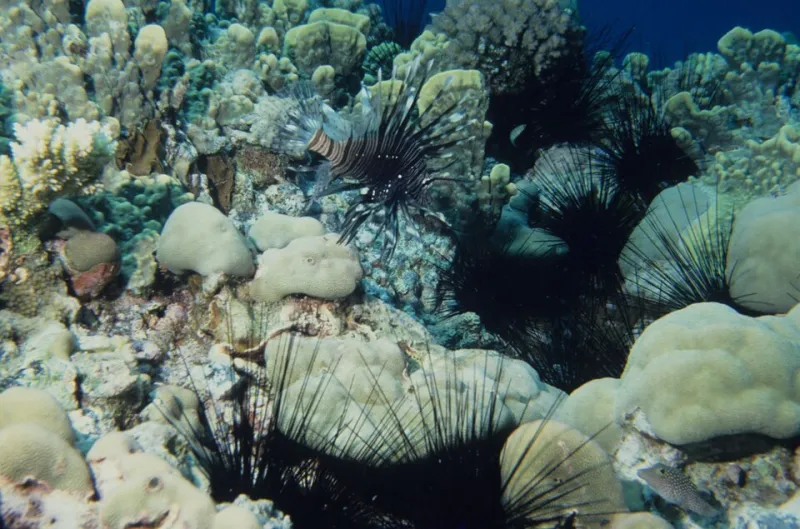
What is less frequently discussed in industry materials is the ecological function these formations serve. Phosphorite structures create complex three-dimensional habitats on what would otherwise be relatively featureless sediment plains. They support dense communities of invertebrates, sponges, and microbial mats — organisms that form the base of benthic food webs feeding commercially important fish species. Removing these formations is not simply a matter of extracting inert rock; it is the dismantling of habitat architecture that took geological epochs to construct.
The Regulatory Patchwork and Its Consequences
Oversight of seafloor mineral extraction in US waters is divided among multiple federal agencies, including the Bureau of Ocean Energy Management (BOEM), the National Oceanic and Atmospheric Administration (NOAA), and, in certain jurisdictions, the Army Corps of Engineers. This fragmented governance structure has produced what several marine policy researchers describe as a permitting landscape riddled with ambiguity.
Critically, the legal thresholds that trigger mandatory environmental impact assessments for seafloor mining activities remain inconsistently applied. Some extraction operations have proceeded under categorical exclusions designed for far less disruptive seafloor interventions. Industry representatives have argued that existing permits for sediment sampling and exploratory drilling provide sufficient regulatory cover for broader extraction activities — a position that conservation groups have contested in federal court with mixed results.
The scientific community has repeatedly flagged these gaps. A 2022 commentary published in Marine Policy noted that current US regulatory instruments were drafted largely without anticipating the scale or character of modern seafloor mineral extraction, and called for a comprehensive legislative update that has yet to materialize in Congress.
What Recovery Actually Looks Like — If It Happens at All
One of the most contentious scientific debates surrounding seafloor phosphate mining concerns ecological recovery timelines. Industry-commissioned studies have cited recovery periods of between five and twenty years for disturbed benthic communities, figures that have been widely criticized by independent researchers as optimistic to the point of misleading.
Long-term monitoring data from analogous deep-sea disturbance experiments — including the IOM BIE study conducted in the Pacific and the DISCOL experiment off Peru — paint a considerably grimmer picture. Recolonization of disturbed sediment zones by macrofauna proceeds slowly and unevenly, with some taxonomic groups remaining suppressed for decades. More significantly, the physical structures — phosphorite crusts, nodule fields — that define habitat complexity do not regenerate within any ecologically meaningful timeframe. Once removed, they are effectively gone.
For fisheries scientists, this distinction matters enormously. The rockfish assemblages, Pacific halibut populations, and deep-water crab species that support West Coast commercial fisheries are not simply dependent on open water; they rely on structured seafloor environments for spawning, juvenile refuge, and foraging. Degrading those environments does not produce a temporary dip in productivity — it can represent a permanent reduction in the habitat's carrying capacity.
Industry Pushback and the Science Communication Challenge
The phosphate extraction industry has not been passive in responding to scientific criticism. Several companies have funded their own environmental baseline studies, the methodologies of which have drawn scrutiny from peer reviewers for relying on short survey windows and spatially limited sampling grids. These studies have nonetheless been cited in permit applications as evidence of minimal ecological risk.
Beyond the technical disputes, the industry has advanced a broader narrative framing ocean phosphate extraction as an environmental necessity — a means of reducing dependence on terrestrial mining operations that carry their own significant ecological and human rights costs. This argument has gained some traction in policy circles, complicating the advocacy landscape for marine conservation organizations that might otherwise present a unified front.
Marine biologists who have spoken publicly about extraction risks report experiencing sustained pressure to qualify their findings or avoid publication in venues likely to attract media attention. While such dynamics are difficult to document formally, they reflect a pattern that has appeared in other resource extraction debates involving ocean science.
Voices from the Fishing Communities
Perhaps the most underrepresented perspective in the regulatory proceedings surrounding Pacific seafloor phosphate extraction belongs to commercial fishing operators and the coastal communities whose livelihoods depend on the fisheries in question. Fishing associations from California, Oregon, and Washington have submitted public comments expressing concern about extraction proposals, but their technical capacity to engage with the complex environmental impact documentation required in formal proceedings is limited compared to that of well-resourced industry legal teams.
Some tribal nations with treaty fishing rights in Pacific waters have also raised objections, arguing that extraction activities in areas subject to treaty protections require government-to-government consultation that has not been adequately conducted. These claims have added a legal dimension to the conflict that federal agencies are only beginning to address.
The Broader Significance for Ocean Science
The phosphate extraction debate is, at its core, a stress test for the principles of precautionary marine management. The scientific uncertainty surrounding benthic recovery timelines is real — but uncertainty in the face of potentially irreversible ecosystem change has historically been treated, under frameworks like the Magnuson-Stevens Fishery Conservation and Management Act, as a reason for caution rather than a license for proceeding.
Whether that precautionary logic will prevail against the economic pressures driving mineral extraction in US Pacific waters remains an open question. What is clear is that the marine science community has a critical role to play in ensuring that the knowledge gaps are honestly characterized, that industry-sponsored research is subjected to rigorous independent scrutiny, and that the ecological stakes are communicated to policymakers and the public with the clarity this moment demands.
The seafloor is not a warehouse. The organisms that inhabit it are not incidental. And the fisheries built upon those ecosystems represent both an economic inheritance and a conservation responsibility that this generation of ocean scientists and managers cannot afford to treat as negotiable.