No Easy Fix: The Scientific Fault Lines Running Through America's Hypoxic Zone Crisis
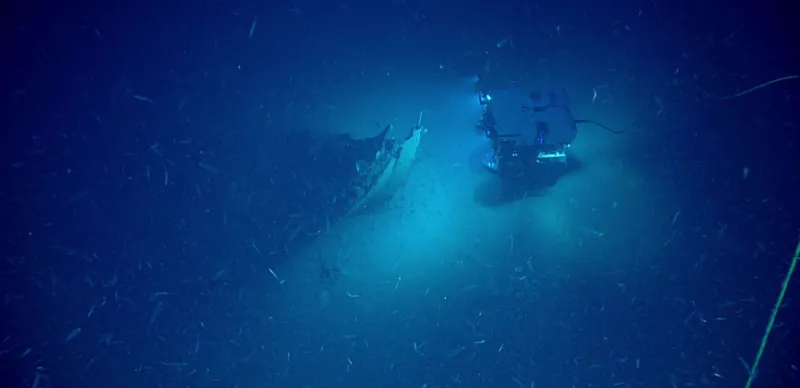
Photo: Bureau of Ocean Energy Management/United States Department of the Interior, Public domain, via Wikimedia Commons
Every summer, a vast stretch of the northern Gulf of Mexico becomes inhospitable to most marine life. Dissolved oxygen levels plummet below two milligrams per liter — the threshold commonly used to define hypoxia — forcing mobile species like shrimp and fish to flee and suffocating those that cannot. At its peak, this so-called dead zone can blanket more than 6,000 square miles of seafloor, making it one of the largest human-influenced hypoxic zones on the planet.
Scientists have studied the Gulf's dead zone for more than four decades. The mechanisms driving it are well understood: excess nitrogen and phosphorus, delivered primarily by agricultural runoff through the Mississippi River Basin, fuel explosive algal growth near the surface. When that biomass sinks and decomposes, the process consumes oxygen faster than circulation can replenish it. The science of why the dead zone forms is, by most accounts, settled.
What is decidedly not settled is how to fix it.
A Problem With No Single Owner
The Mississippi River Basin drains roughly 41 percent of the continental United States, encompassing farmland across 31 states. That geographic reality sits at the heart of why solutions remain so contested. Any meaningful intervention must account for agricultural practices in Iowa, wastewater infrastructure in Illinois, and floodplain management decisions made generations ago across the entire watershed.
"When you're dealing with a system this large and this complex, the idea that there's one lever you can pull is simply not realistic," said one Gulf Coast oceanographer who has spent more than two decades modeling nutrient transport through the Mississippi system. "Every proposed solution is technically correct in isolation. The disagreements start when you ask which one to prioritize and who pays for it."
The federal interagency task force that oversees the Gulf hypoxia action plan has repeatedly set targets for nutrient reduction, most recently aiming to shrink the dead zone to less than 1,930 square miles. Progress toward those targets has been slow, and the zone's size has shown no statistically significant long-term decline. That stagnation has intensified the debate among researchers.
Camp One: Upstream Nutrient Reduction
The most widely endorsed position among marine scientists holds that reducing the nitrogen and phosphorus load entering the Gulf is the only durable solution. Proponents point to a body of modeling work demonstrating a roughly linear relationship between nutrient loading and hypoxic area, suggesting that meaningful cuts upstream would produce measurable improvements downstream.
Advocates of this approach generally call for a combination of expanded wetland buffers, cover cropping, precision fertilizer application, and improved wastewater treatment across the basin. Several peer-reviewed studies estimate that a 45 percent reduction in nitrogen loading would be required to meet the task force's size targets — a figure that implies substantial changes to current agricultural practices across multiple states.
Critics within the scientific community do not dispute the underlying chemistry. Their concerns are practical. "The nutrient reduction framework is scientifically sound, but it assumes a level of coordinated policy implementation that has never materialized in 40 years," noted a watershed biogeochemist affiliated with a Midwestern research university. "At some point, we have to ask whether we're waiting for a solution that the political system is structurally incapable of delivering."
Camp Two: Engineering the Flow
A second school of thought has gained traction in recent years, centered on large-scale hydrological interventions designed to alter how water and sediment move through the lower Mississippi and its delta. Proponents argue that restoring sediment diversions — essentially redirecting portions of the river into deteriorating coastal wetlands — could rebuild the deltaic marshes that historically acted as nutrient sponges before modern flood control infrastructure was constructed.
Several major diversion projects are currently moving through planning and permitting phases in Louisiana, driven in part by the state's coastal master plan. Supporters contend that rebuilding wetland acreage would intercept nutrients before they reach the open Gulf while simultaneously addressing land subsidence and storm surge vulnerability.
Opponents raise ecological concerns that are themselves scientifically grounded. Some researchers warn that large diversions could dramatically alter salinity regimes in estuaries that support commercially critical oyster reefs and juvenile fish nurseries. "We may be trading one ecological problem for another," cautioned a coastal ecologist whose work focuses on estuarine community dynamics. "The modeling on downstream ecological effects of large diversions is still quite uncertain."
Camp Three: Marine Spatial Planning as a Parallel Track
A third perspective, less prominent in mainstream policy discussions but increasingly represented in the academic literature, argues that managing where fishing and aquaculture occur in and around hypoxic zones may offer near-term relief while longer-term nutrient reduction strategies are pursued.
Marine spatial planning approaches could, in theory, establish seasonal exclusion zones or redirect fishing effort away from areas most severely affected by low oxygen, reducing mortality among economically important species. Some researchers also point to the potential of large-scale shellfish aquaculture as a biological nutrient removal tool, given that bivalves filter phytoplankton and, when harvested, physically remove nitrogen and phosphorus from the system.
Skeptics in this camp's own field acknowledge the limitations. "Spatial planning doesn't address the source of the problem," said one fisheries scientist who works closely with Gulf shrimping communities. "It's harm reduction, not restoration. And without accompanying nutrient management, you're essentially just rearranging deck chairs."
Why Consensus Remains Out of Reach
The persistence of disagreement is not, most researchers emphasize, a failure of science. The data are abundant and largely consistent. What varies are the underlying assumptions researchers bring to questions of feasibility, acceptable risk, and the appropriate timescale for evaluating success.
Institutional fragmentation compounds the problem. Federal agencies with jurisdiction over the Gulf hypoxia issue include the Environmental Protection Agency, the Army Corps of Engineers, the National Oceanic and Atmospheric Administration, and the Department of Agriculture, each operating under different statutory mandates and budget cycles. State-level authority over agricultural practices adds another layer of complexity.
For policymakers attempting to translate competing scientific frameworks into actionable regulation, the disagreement can feel paralyzing. Some observers argue that the scientific community bears a responsibility to communicate more clearly about which uncertainties are fundamental and which are resolvable with additional research.
"There's a difference between saying 'we don't know' and saying 'we know enough to act, but the action is politically difficult,'" said one environmental policy researcher who studies science-policy interfaces in large marine ecosystems. "Conflating those two things does real harm to the public's ability to hold decision-makers accountable."
What the Disagreement Means for the Gulf
For the fishing communities, coastal economies, and marine ecosystems that bear the consequences of hypoxia each summer, the ongoing debate carries tangible costs. The Gulf's shrimp fishery — once among the most productive in the world — has declined significantly over recent decades, a trend driven by multiple stressors in which hypoxia plays a documented role.
Most researchers involved in Gulf hypoxia work agree on at least one point: no single intervention will be sufficient, and meaningful progress will require parallel action across nutrient management, hydrological restoration, and adaptive fisheries management simultaneously. The disagreements, in that sense, may be less about which approach is correct and more about which should come first — and who, ultimately, should be responsible for making it happen.
That question, as much as any scientific uncertainty, is what keeps the debate alive.