Urchin Barrens: How Purple Sea Urchins Are Dismantling the West Coast's Kelp Ecosystem One Holdfast at a Time
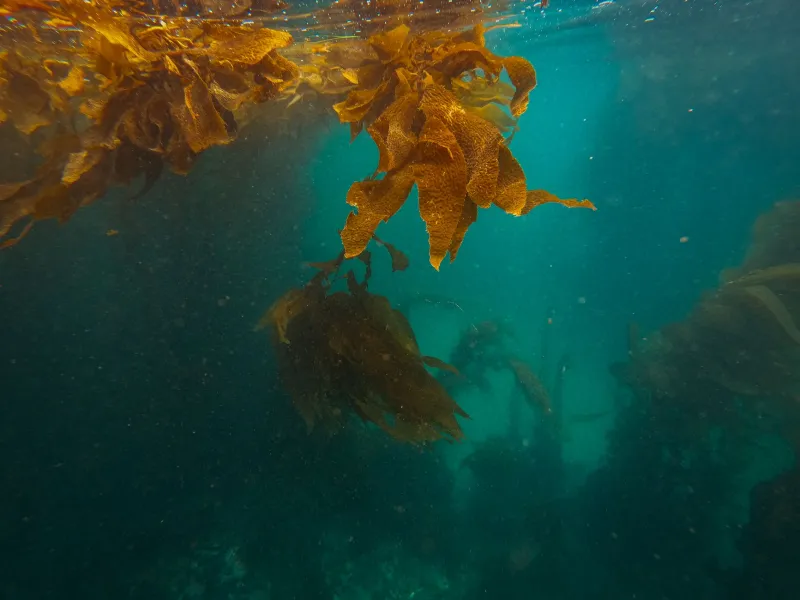
For decades, marine scientists described California's kelp forests in reverential terms — underwater cathedrals of towering Macrocystis pyrifera, filtering Pacific sunlight into shafts of green and gold, sheltering thousands of species beneath their swaying canopies. Today, stretching from Northern California into Oregon and Washington, vast stretches of that same seafloor have been reduced to what researchers call urchin barrens: flat, nearly lifeless expanses dominated by dense mats of purple sea urchins that have consumed virtually every trace of living kelp.
The story of how this happened is not simply one of a single species getting out of control. It is a story about cascading ecological failures, the compounding effects of climate-driven ocean warming, and a management conversation that has not yet caught up with the scale of what is unfolding on the Pacific seafloor.
The Predator That Wasn't There Anymore
For most of the twentieth century, Strongylocentrotus purpuratus — the purple sea urchin — was a common but manageable presence in Pacific kelp ecosystems. Its population was held in balance by a suite of predators, most critically the sunflower sea star (Pycnopodia helianthoides), one of the largest and most ecologically consequential sea stars on Earth. A single sunflower sea star could patrol wide areas of seafloor, consuming urchins with enough efficiency to prevent the kind of population explosions that marine ecologists now observe routinely.
In 2013, sea star wasting disease — a syndrome linked to a densovirus and dramatically amplified by warmer-than-average ocean temperatures — began killing sea stars along the West Coast at a scale that shocked even veteran researchers. Pycnopodia helianthoides was hit particularly hard. By some estimates, populations of the sunflower sea star declined by more than 90 percent across their range within a matter of years. The International Union for Conservation of Nature subsequently listed the species as critically endangered.
The ecological consequences were not immediate, but they were inevitable. With their primary predator functionally absent, purple sea urchin populations began to expand — not gradually, but exponentially. Survey data from California's Department of Fish and Wildlife documented increases of several hundred percent in some monitoring zones within a relatively short period following the sea star die-off.
When Starvation Becomes a Strategy
One of the more counterintuitive aspects of the urchin barren phenomenon is that the animals driving it are, in many cases, starving. Purple sea urchins can enter a physiological state sometimes described by researchers as "zombie mode" — dramatically reducing their metabolic activity and surviving on minimal nutrition for extended periods, even when little or no kelp is available. Rather than dying off when food becomes scarce, they persist, continue to graze on any kelp recruits that attempt to establish, and effectively prevent the forest from regenerating.
This is a critical distinction from the standard predator-prey dynamics many conservationists assume are at work. The urchin barren is not simply a sign that there is not enough kelp to support the urchin population. In many areas, the urchins have consumed the kelp and then remained, preventing recovery through persistent low-level grazing pressure. The ecosystem becomes locked in a degraded state — what ecologists refer to as an alternative stable state — that resists recovery even when other conditions improve.
The Thermal Dimension
The role of ocean warming in this crisis extends beyond its contribution to the sea star wasting disease outbreak. Warmer Pacific waters, driven by both the 2014-2016 marine heat wave event commonly referred to as "the Blob" and the longer-term trajectory of anthropogenic climate change, have affected kelp forests directly. Macrocystis pyrifera is sensitive to elevated sea surface temperatures, and prolonged thermal stress reduces kelp growth rates, weakens fronds, and impairs reproduction. At the same time, warmer waters tend to favor urchin reproductive success, further tilting the ecological balance.
Research published in the years following the marine heat wave documented dramatic kelp canopy losses along Northern California's coast — losses that have not recovered to pre-event levels. In some areas, more than 95 percent of the kelp canopy disappeared. The combination of thermal stress on kelp and thermally enhanced urchin recruitment created conditions in which the forest had little capacity to bounce back, even as scientists and conservation organizations began mobilizing restoration resources.
Why Current Management Strategies May Be Falling Short
The dominant response to kelp forest decline along the US West Coast has focused heavily on active restoration: transplanting juvenile kelp, cultivating sporophytes in hatchery settings, and reseeding targeted areas. These efforts are scientifically meaningful and operationally impressive, representing genuine collaboration between academic institutions, state agencies, and nonprofit organizations. However, a growing number of marine ecologists argue that restoration planting without aggressive urchin population management is, at best, a temporary measure.
Planting kelp into an active urchin barren without first reducing urchin density is, as one researcher described it in a recent symposium context, analogous to replanting a garden while leaving the deer inside the fence. The transplants are consumed before they can establish. The feedback loop — urchins prevent kelp recovery, absence of kelp prevents the natural urchin mortality that food scarcity would otherwise cause — remains intact.
Several management approaches have been proposed and piloted with varying degrees of success. Manual urchin removal by divers has shown promise in localized areas, with kelp returning relatively quickly to cleared zones in some California study sites. Commercial urchin harvesting, which once provided a natural population check when urchin roe commanded strong market prices, has declined significantly as the quality of starving urchins makes them commercially unviable. Efforts to develop alternative markets or processing approaches for low-quality urchin are ongoing but have not yet achieved meaningful scale.
The reintroduction or assisted recovery of sunflower sea stars represents a longer-term ecological solution that several research groups are actively investigating. The challenges are substantial — disease dynamics are not fully resolved, and reintroducing a top predator into an already-altered ecosystem carries its own risks — but the scientific community increasingly views predator restoration as a necessary component of any durable recovery strategy.
A System Under Pressure
What the urchin barren crisis ultimately illustrates is the danger of managing individual components of a marine ecosystem in isolation. Kelp forests are not simply stands of algae that can be replanted like trees after a wildfire. They are the product of intricate relationships between dozens of species across multiple trophic levels, relationships that took millennia to establish and that can be dismantled with surprising speed when key nodes are removed.
For the marine science community, the challenge now is to develop integrated management frameworks that address urchin population dynamics, predator recovery, thermal stress mitigation, and active restoration simultaneously — and to communicate the complexity of that challenge honestly to policymakers and the public. The kelp forests of America's Pacific coast are not simply struggling. In many places, they are gone. Whether they can return, and what it will take to bring them back, depends on whether the scientific and management communities are willing to confront the full scope of the problem rather than its most tractable pieces.