Out of Step: How Warming-Driven Seasonal Mismatches Are Quietly Destabilizing US Fish Populations
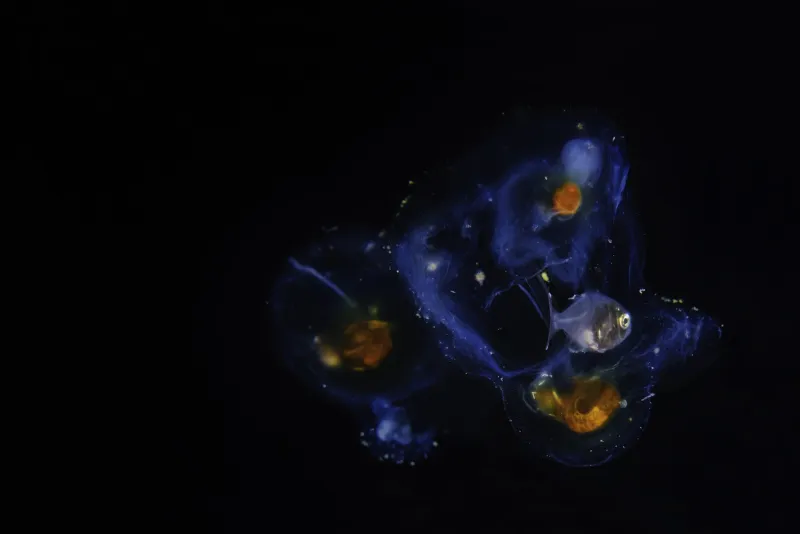
Ecology runs on timing. The annual cycles of marine life—when zooplankton bloom, when larval fish hatch, when adult predators arrive at spawning grounds—have been calibrated over evolutionary time to align with one another in ways that maximize survival and reproductive success. These synchronizations are not incidental. They are the structural logic of the food web itself, the mechanism by which energy moves efficiently from phytoplankton through invertebrates to fish and ultimately to the fishing vessels that support coastal economies across the United States.
Climate change is disrupting that logic. As ocean temperatures rise, different species and different life stages are responding at different rates, pulling the seasonal calendar of marine ecosystems apart in ways that are difficult to observe, harder to model, and almost entirely absent from the management frameworks that govern US fisheries. The phenomenon—phenological mismatch—is not new to ecological science. But its application to marine systems, and its implications for commercial fisheries, is only now receiving the sustained attention it warrants.
What Phenological Mismatch Actually Means
The term derives from phenology, the study of cyclic and seasonal biological events and their relationship to climate and environmental conditions. In terrestrial ecology, phenological mismatch became widely recognized through studies of migratory birds arriving at breeding grounds after peak caterpillar abundance had already passed—a classic example of warming-driven desynchronization. The marine version operates through analogous mechanisms but in a three-dimensional, highly dynamic medium that makes it considerably more difficult to document.
In ocean systems, the critical matchups involve the timing of phytoplankton blooms, zooplankton production peaks, larval fish hatching windows, and the arrival of adult predators at feeding aggregations. When these events align, larvae find abundant prey during their most energetically demanding developmental period, juvenile fish encounter prey fields that support rapid growth, and adult predators arrive at locations where prey are concentrated and accessible. When the alignment breaks down—when warming causes one component of the chain to advance or delay while others do not shift commensurately—the consequences propagate through the food web in ways that look, from a management standpoint, like unexplained recruitment failure or anomalous mortality.
The Gulf of Maine: A Case Study in Accelerating Disruption
Few places in the United States offer a more instructive window into phenological mismatch than the Gulf of Maine. Already documented as one of the fastest-warming ocean bodies in the Northern Hemisphere, the Gulf has experienced temperature increases over the past decade that have compressed what were once predictable seasonal transitions into compressed, unpredictable fluctuations.
Atlantic cod in the Gulf of Maine provide a particularly well-documented example of the consequences. Cod larvae require a specific prey field—dominated by Calanus finmarchicus copepods—during their earliest developmental weeks. Historically, the spring phytoplankton bloom triggered a copepod production pulse that coincided reliably with the larval cod hatching window. But as Gulf temperatures have risen, phytoplankton blooms are occurring earlier in the season, copepod abundance peaks are advancing correspondingly, and larval cod are hatching into a prey field that has already begun to decline.
The result is a mismatch window—a period during which larvae are present but prey are not sufficiently abundant—that has widened measurably over the past two decades. Researchers at the Gulf of Maine Research Institute and NOAA's Northeast Fisheries Science Center have linked this dynamic to persistently poor cod recruitment, even in years when spawning stock biomass would historically have predicted stronger year classes. The fish are spawning. The larvae are hatching. But the timing is wrong, and the cost is invisible to stock assessment models that treat recruitment failure as statistical noise rather than a predictable consequence of phenological disruption.
Pacific Salmon and the Shifting Feast
On the West Coast, phenological mismatch is playing out through a different but equally consequential mechanism involving Pacific salmon and the coastal upwelling systems that sustain them.
Juvenile Chinook and coho salmon enter the ocean from their natal rivers during a narrow developmental window in spring, arriving in nearshore Pacific waters at a time historically synchronized with the onset of coastal upwelling. Upwelling brings cold, nutrient-rich water to the surface, triggering phytoplankton blooms that fuel zooplankton production and ultimately support the small fish and invertebrates on which juvenile salmon depend for their critical first ocean winter.
In recent years, however, the timing of that upwelling onset has become less predictable, with some years experiencing delayed starts that leave juvenile salmon entering ocean waters before their prey base has developed. Research from NOAA's Northwest Fisheries Science Center has documented correlations between delayed upwelling onset and poor adult salmon returns three to five years later—the lag time reflecting the ocean survival period of those juvenile cohorts. In years when the mismatch is severe, marine survival rates for juvenile Chinook can drop by half or more compared to well-matched years.
For fisheries managers, this creates a deeply uncomfortable reality: the harvest levels set for returning adult salmon are based on models that do not adequately incorporate the variable ocean survival driven by phenological conditions experienced years earlier. The management system is, in effect, making decisions about fish that haven't been counted yet based on assumptions about fish that didn't survive as expected.
Mid-Atlantic Forage Fish and the Menhaden Problem
The Mid-Atlantic Bight presents yet another dimension of phenological mismatch, centered on one of the most ecologically important—and intensively harvested—species in US coastal waters: Atlantic menhaden.
Menhaden serve as a critical energy conduit in Mid-Atlantic food webs, converting zooplankton biomass into a lipid-rich prey source consumed by striped bass, bluefish, weakfish, osprey, dolphins, and humpback whales, among many others. Their seasonal movements—northward in spring and summer, southward in fall—are driven by temperature preferences and prey availability. As ocean warming shifts the thermal structure of the Mid-Atlantic Bight, menhaden distribution is advancing northward and into deeper waters on schedules that do not necessarily align with the seasonal movements of their predators.
Striped bass, whose recovery from near-collapse in the 1980s represents one of the signal achievements of US fisheries management, are showing signs of nutritional stress in recent stock assessments. Condition indices—measures of fish weight relative to length that serve as proxies for nutritional health—have declined in recent years, a pattern some researchers attribute in part to reduced spatial overlap with menhaden prey schools during critical summer feeding periods. The fish are present. The prey are present. But they are increasingly in different places at the same time.
The Management Blind Spot
The persistence of phenological mismatch as an underaddressed driver of fisheries variability reflects several structural limitations in how US fisheries science and management operate.
Stock assessment models are typically built around historical relationships between spawning stock biomass and subsequent recruitment—relationships that assume the environmental context of the past will persist into the future. As phenological conditions shift those relationships, the models produce projections that systematically misrepresent what is actually happening in the water. Managers working from those projections set harvest levels that may be appropriate for a static ecosystem but are increasingly misaligned with a dynamic one.
The data streams needed to characterize phenological conditions—detailed time-series of plankton abundance, bloom timing, and larval fish surveys—are also chronically underfunded relative to the stock assessment surveys that dominate NOAA's fisheries science budget. Without those data, even managers who recognize the importance of phenological dynamics lack the information needed to incorporate them into decisions.
Toward a Seasonally Aware Fisheries Science
Addressing phenological mismatch in US fisheries management will require both scientific and institutional changes. On the scientific side, the integration of plankton monitoring, larval survey data, and physical oceanographic observations into stock assessment frameworks represents a tractable near-term goal. Several research institutions are already developing coupled biological-physical models capable of projecting mismatch risk under different warming scenarios—tools that could meaningfully improve recruitment forecasts if incorporated into management processes.
On the institutional side, fisheries management councils need to develop the capacity to recognize phenological signals in recruitment data and adjust harvest recommendations accordingly, even in the absence of perfect mechanistic understanding. The precautionary principle—already embedded in Magnuson-Stevens—provides a statutory basis for erring on the side of conservation when environmental conditions suggest elevated mismatch risk.
The ocean is not simply warming. It is falling out of rhythm. And until US fisheries management begins to take that desynchronization seriously, the gap between what the models predict and what the water delivers will continue to widen.