Nets That Never Stop Fishing: The Derelict Gear Crisis Haunting America's Seafloors
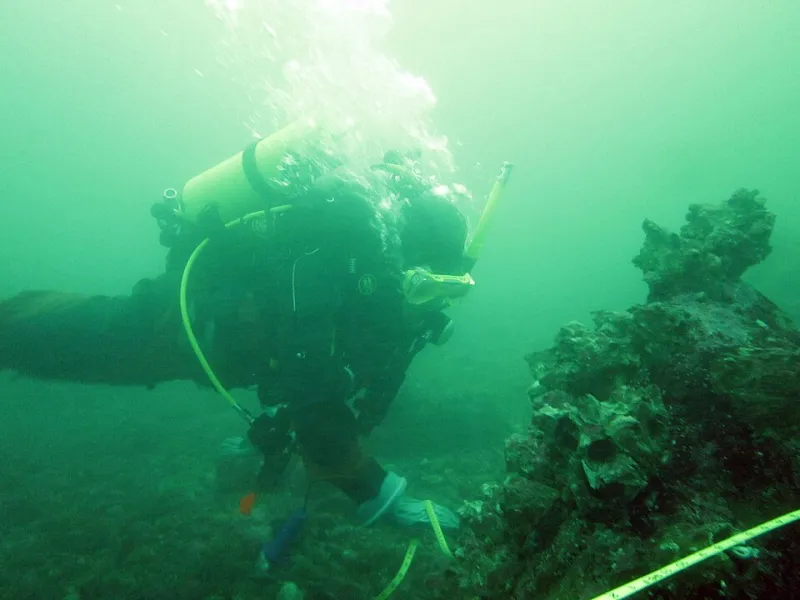
Photo: USEPA Environmental-Protection-Agency, Public domain, via Wikimedia Commons
When a commercial fishing net is lost at sea, it does not retire. It continues working—indiscriminately, indefinitely, and invisibly. Crab pots, gill nets, longlines, and trawl gear that slip from vessels or are deliberately abandoned become autonomous traps, cycling through a grim routine of capture and decay that marine biologists have termed "ghost fishing." The scale of this phenomenon across US waters is, by most credible estimates, staggering—and the scientific infrastructure needed to confront it remains woefully underdeveloped.
Derelict fishing gear (DFG) is not a new concern. Reports of entangled marine mammals and smothered benthic communities have circulated in the scientific literature since the 1980s. What has changed is the urgency with which researchers are now approaching the problem, driven by accumulating evidence that ghost gear represents not merely a localized nuisance but a systemic ecological threat with measurable consequences for fish populations, protected species, and seafloor habitat integrity.
The Scale of What We Don't Know
One of the most disquieting aspects of the derelict gear problem is how poorly it is quantified. The National Oceanic and Atmospheric Administration (NOAA) estimates that approximately 640,000 metric tons of fishing gear enters the world's oceans annually, but translating that figure into meaningful regional assessments for US coastal waters has proven exceptionally difficult. Unlike plastic debris that washes ashore and can be catalogued, most ghost gear sinks or drifts into depths and locations that make systematic survey work logistically demanding and expensive.
Dr. Stephanie Borrelle, a marine debris researcher who has collaborated with NOAA's Marine Debris Program, has noted that current monitoring frameworks were not designed with derelict gear in mind. "We have reasonable datasets for floating macroplastics and some shoreline debris," she has observed in published commentary, "but the benthic dimension—what's happening on the seafloor—is largely invisible to us at meaningful spatial scales."
In the Puget Sound region, where the Washington Department of Fish and Wildlife has conducted some of the country's most sustained derelict gear removal efforts, survey teams have retrieved tens of thousands of crab pots over the past two decades. Yet program coordinators consistently acknowledge that removal numbers almost certainly underrepresent what remains. Sedimentation buries gear over time, obscuring it from both visual surveys and sonar imaging. Gear also migrates with currents, making it difficult to establish reliable search grids.
Technologies Chasing a Moving Target
A cohort of researchers is working to close the detection gap, and their approaches reflect both the ingenuity and the constraints of the field. Side-scan sonar has long been the workhorse of seafloor mapping, but its effectiveness in detecting relatively thin, low-profile gear like gill nets is limited. More promising developments are emerging from the application of synthetic aperture sonar, autonomous underwater vehicles (AUVs), and, most recently, machine-learning-assisted image analysis.
At the University of Washington's Applied Physics Laboratory, teams have been refining AUV-based survey protocols that can cover larger swaths of seafloor than traditional diver surveys while generating the high-resolution acoustic imagery necessary to distinguish gear from natural substrate features. The challenge, as researchers there have emphasized in recent grant applications, is not the technology itself but the cost of deploying it at scales that would produce operationally useful data.
Separately, a collaboration between NOAA's Pacific Islands Fisheries Science Center and private remote sensing firms has been exploring satellite-based detection of surface-drifting gear in Hawaiian waters. While floating nets represent only a fraction of total ghost gear, the approach has demonstrated proof-of-concept value and could eventually be integrated into broader monitoring networks. The question of whether federal funding commitments will materialize to scale these efforts remains, as of this writing, unresolved.
Regulatory Gaps and Industry Accountability
The science of detection is only one dimension of the problem. Even where removal programs exist, the regulatory environment governing gear accountability in US commercial fisheries has not kept pace with what researchers now understand about DFG's ecological footprint.
Federal fisheries management under the Magnuson-Stevens Fishery Conservation and Management Act includes provisions for addressing essential fish habitat and bycatch, but derelict gear sits awkwardly within this framework. Regional fishery management councils have authority to impose gear marking requirements and loss-reporting mandates, and some—particularly those overseeing crab and lobster fisheries in the Northeast and Pacific Northwest—have done so with varying degrees of rigor. However, enforcement capacity is inconsistent, and penalties for unreported gear loss are rarely sufficient to shift industry behavior in a meaningful direction.
Advocates for stronger regulatory standards point to models in other countries, including Norway and Australia, where real-time gear tracking via electronic monitoring and vessel monitoring systems has been integrated into licensing requirements. The commercial fishing industry in the United States has generally resisted such mandates, citing cost burdens and what some industry representatives describe as regulatory overreach into operational practices. The resulting policy stalemate has left researchers and removal program coordinators working around the edges of a problem that many believe requires a more fundamental structural response.
The Ecological Cost of Inaction
For marine biologists working in affected ecosystems, the abstract policy debate has a concrete face. In the Pacific Northwest, Dungeness crab populations in areas with high ghost pot density show measurable mortality effects that complicate stock assessments already complicated by climate-driven shifts in distribution. In the Florida Keys, derelict lobster traps accumulate on coral reef structures, causing direct physical damage and contributing to localized hypoxia as trapped and decomposing organisms consume oxygen in confined spaces.
Perhaps the most visceral evidence of the problem's severity comes from documented entanglement rates among large marine mammals. NOAA's Marine Mammal Health and Stranding Response Program records indicate that entanglement in fishing gear—including derelict gear—remains one of the leading human-caused mortality factors for several endangered and threatened cetacean populations, including North Atlantic right whales, whose numbers have declined to fewer than 350 individuals.
A Problem That Demands More Than Cleanup
Removal programs, for all their value, address symptoms rather than sources. The scientific consensus emerging from the derelict gear research community increasingly emphasizes that sustainable solutions require a combination of improved detection technology, binding gear-tracking requirements, adequately funded retrieval infrastructure, and—critically—economic incentives that make responsible gear management the rational choice for fishing operations operating on thin margins.
Some researchers have proposed extended producer responsibility frameworks that would require gear manufacturers to participate in end-of-life management programs, similar to models applied in the European Union under the Single-Use Plastics Directive. Others advocate for gear deposit schemes analogous to bottle return programs, creating financial motivation for fishers to retrieve lost gear rather than leave it in place.
None of these proposals are without complications, and the Marine Forum community will recognize that translating promising frameworks into implemented policy in the US context involves navigating a complex web of federal, state, and tribal jurisdictions, each with legitimate interests and competing priorities. What the science does make clear is that the cost of continued inaction—measured in habitat degradation, species mortality, and compromised fishery productivity—is neither invisible nor trivial. The nets are still fishing. The question is how much longer we allow them to.