The Whale as a Living Pump: Rethinking Cetaceans as Architects of Ocean Fertility
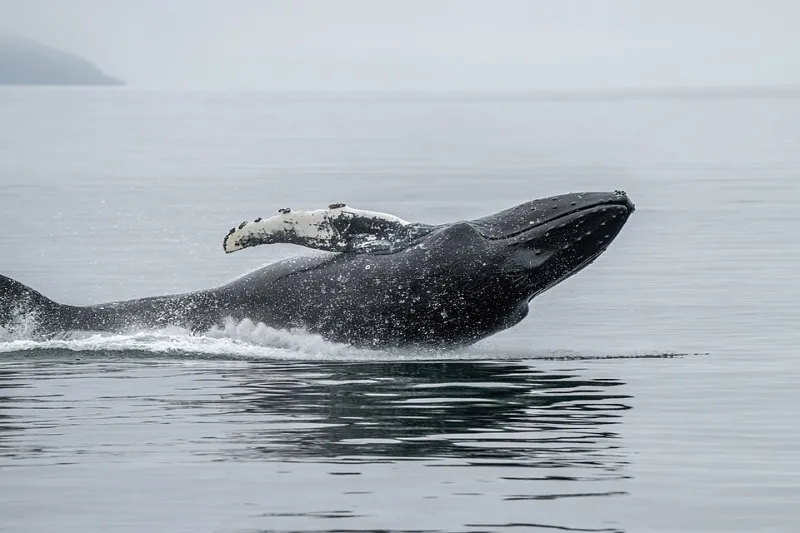
Photo: Giles Laurent, CC BY-SA 4.0, via Wikimedia Commons
For decades, conversations about whale conservation in the United States have centered on what humans take from these animals — through commercial hunting, vessel strikes, entanglement in fishing gear, and acoustic disturbance. That framing, while necessary, has obscured a parallel and arguably more consequential question: what do whales give back to the ocean? Emerging research suggests the answer is far more substantial than previously understood.
Large cetaceans, it turns out, are not passive participants in marine ecosystems. They are active agents of nutrient redistribution, biological mixing, and even atmospheric carbon regulation. The science exploring these functions has matured considerably over the past two decades, and its implications are beginning to reshape how marine biologists and oceanographers think about the value of whale recovery programs.
The Mechanics of the Whale Pump
The foundational concept here is what researchers have termed the "whale pump" — a process by which large cetaceans effectively transport nutrients from the deep water column toward the surface, where photosynthetic life depends on them.
Many whale species feed at depth, consuming krill, squid, and fish in the mesopelagic zone where iron, nitrogen, and phosphorus are relatively concentrated. They then ascend to shallower waters to breathe, rest, and defecate. That last activity may sound unremarkable, but the biological consequences are significant. Whale fecal plumes are nutrient-dense, liquid, and released near the surface — precisely the zone where phytoplankton require those nutrients most. Unlike sinking organic matter, which carries nutrients downward and out of the productive zone, whale waste operates as a reverse conveyor, lifting fertility toward the light.
Research published by marine scientists at the Woods Hole Oceanographic Institution and elsewhere has estimated that, in historically abundant whale populations, this mechanism contributed meaningfully to phytoplankton productivity across large stretches of ocean. In the Southern Ocean, where iron is a limiting nutrient, studies have calculated that whale-derived iron fertilization may once have supported phytoplankton blooms on a scale that rivaled some anthropogenic enrichment scenarios.
In US waters, the dynamic plays out across multiple regions. Humpback whales feeding in the Gulf of Maine and along the California coast engage in this vertical nutrient transport each season. Sperm whales — the deep-diving specialists that hunt squid in the abyssal zones off the Atlantic and Pacific coasts — perform an even more dramatic version of the same cycle, descending to depths exceeding 3,000 feet before returning to surface waters.
Migration as Nutrient Delivery
The whale pump is only one mechanism through which cetaceans reshape ocean chemistry. Their migrations introduce a second, horizontal dimension to the process.
Humpback whales, for instance, feed intensively in high-latitude waters during summer months — places like the Gulf of Alaska and the waters off New England — before migrating thousands of miles to tropical breeding grounds near Hawaii or the Caribbean. They undertake this journey largely without feeding, meaning the nutrients stored in their bodies from productive northern waters are eventually deposited, through waste and ultimately through death, in oligotrophic tropical systems that are otherwise nutrient-poor.
This lateral transport function has drawn increasing attention from oceanographers who study nutrient limitation in low-latitude ocean systems. The implication is that whale migrations may serve as a kind of biological supply chain, connecting the ocean's most productive regions to its most nutrient-starved ones.
Whale Fall: The Deep-Sea Dividend
Perhaps the most dramatic contribution a whale makes to ocean ecology is its death. When a large cetacean dies and sinks to the seafloor — a phenomenon researchers call a "whale fall" — it delivers an enormous pulse of organic carbon and nutrients to the deep-sea benthos.
A single blue whale carcass can weigh more than 100 tons. As it descends, it passes through successive layers of the water column, feeding scavengers at multiple depths. When it reaches the seafloor, it becomes a concentrated resource for specialized communities of organisms — hagfish, sleeper sharks, polychaete worms, and the uniquely adapted Osedax bone-eating worms first described by scientists at the Monterey Bay Aquarium Research Institute off the California coast.
Whale fall communities can persist for decades, supporting extraordinary local biodiversity in an environment that is otherwise defined by scarcity. Some researchers have proposed that, in historical periods when whale populations were vastly larger than today, whale falls may have served as stepping stones for deep-sea species dispersal — biological islands of abundance distributed across the abyssal plain.
The carbon sequestration dimension of whale falls is also attracting attention. Carbon locked within whale bodies that sink to the deep seafloor is effectively removed from the active carbon cycle on timescales of centuries to millennia. Estimates vary considerably depending on assumptions about historical population sizes, but several peer-reviewed analyses have suggested that the pre-whaling global whale population may have sequestered carbon at rates comparable to some contemporary nature-based climate solutions.
Recovery, Restoration, and Unanswered Questions
The recovery of great whale populations in US waters — still incomplete but measurable in species such as humpbacks and gray whales — offers a rare opportunity to observe these ecological functions reasserting themselves in real time. Federal protections under the Marine Mammal Protection Act have allowed some populations to rebuild since the 1970s, and researchers are beginning to document what that recovery means at the ecosystem level.
But significant uncertainty remains. Baseline population estimates for pre-whaling cetacean abundance in US waters are contested, making it difficult to quantify how diminished the current nutrient pump function actually is relative to historical norms. Climate-driven shifts in prey availability — particularly krill and forage fish — may also be altering the feeding behavior and migratory timing of recovering whale populations in ways that affect their nutrient transport roles.
There is also a broader question about how these findings should inform conservation policy. If whale restoration genuinely delivers measurable climate co-benefits through carbon sequestration and phytoplankton fertilization, does that change the calculus around recovery targets, habitat protections, or even the economic valuation of whale populations? Some economists and ecologists have begun constructing frameworks to quantify these services, though the methodologies remain debated within the scientific community.
A Different Conservation Conversation
What the emerging science of cetacean ecosystem engineering ultimately demands is a recalibration of how the scientific community — and the public — understands what whale conservation is for. The ethical case for protecting these animals has always been compelling on its own terms. The ecological case, it now appears, extends far beyond the animals themselves.
Whales are not simply the beneficiaries of ocean health. They are, in measurable and increasingly well-documented ways, among its architects. That distinction matters for how we design marine protected areas, evaluate the indirect costs of ongoing threats like ship strikes and entanglement, and prioritize recovery efforts across species and regions.
For marine scientists and conservationists working in US coastal waters, the whale pump framework offers both a scientific frontier and a policy lever — one that connects the fate of large cetaceans to questions about ocean productivity, fisheries support, and climate resilience that reach well beyond any single species or any single threat.