Tagged and Tracked: How Next-Generation Fish Monitoring Technology Is Rewriting Fisheries Science — and Raising New Ethical Questions
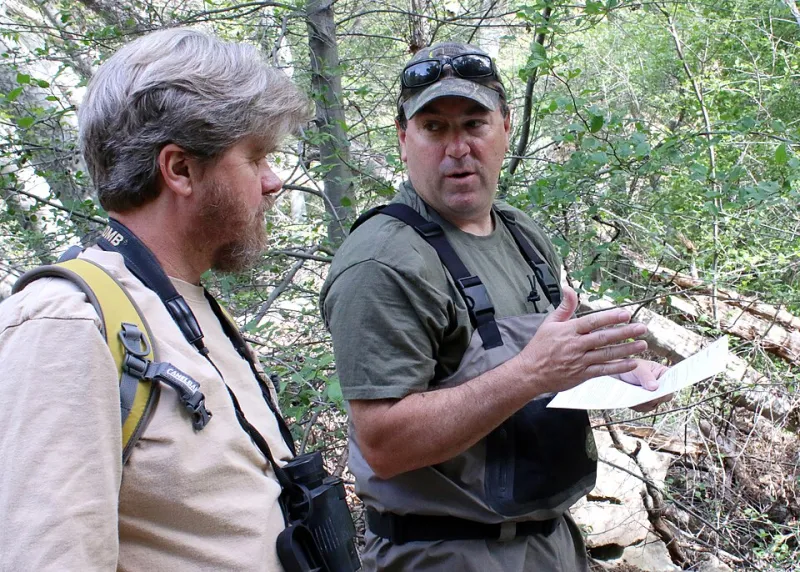
Photo: USFWS Pacific Southwest Region, Public domain, via Wikimedia Commons
For most of the twentieth century, fisheries scientists worked with an inherent blind spot. They could count what came up in nets. They could analyze otoliths for age and growth data. They could, with considerable effort, run mark-recapture studies that offered glimpses of movement between fixed points. What they could not do was follow individual fish through continuous, three-dimensional space across entire ocean basins — watching in something close to real time as animals responded to temperature gradients, prey distributions, and the approach of fishing vessels. That limitation is now dissolving, and the scientific and policy implications are proving to be substantial.
From Pop-Up Tags to Networked Arrays
The technological landscape for fish tracking has changed more in the past fifteen years than in the preceding half-century. Two parallel developments have driven this transformation. The first is the maturation of archival and pop-up satellite archival tags (PSATs), which can be attached to large pelagic species, record depth, temperature, and light-level data over months-long deployments, and then physically detach to transmit summarized location and behavioral data via the Argos satellite system. The second, and arguably more transformative, is the expansion of networked acoustic receiver arrays across US coastal and offshore waters.
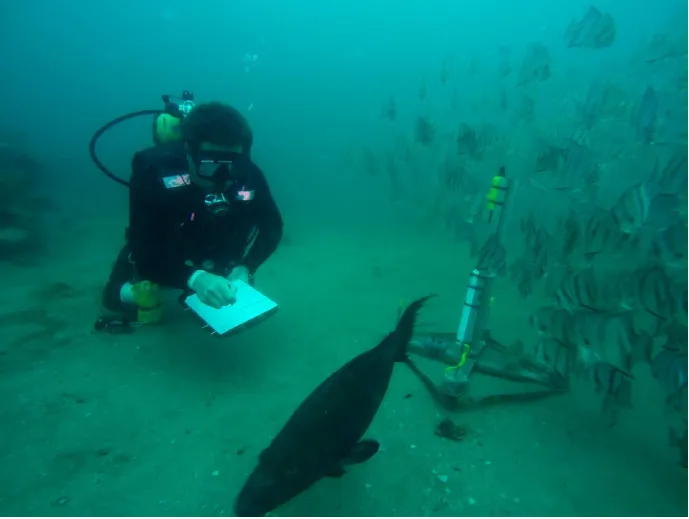
The Ocean Tracking Network, which maintains receiver infrastructure along the Atlantic seaboard and into the Gulf of Mexico, now encompasses thousands of hydrophone receivers capable of detecting acoustic pings from surgically implanted tags in fish passing within detection range. When a tagged striped bass moves through the Hudson River estuary, enters coastal shelf waters off New Jersey, and eventually appears on a receiver off Cape Hatteras, that entire movement history is logged, timestamped, and uploaded to a shared database accessible to researchers across institutions.
"What we're doing now isn't just tracking individual fish," explained one NOAA Fisheries researcher working on Atlantic sturgeon recovery along the East Coast. "We're building a map of how the species uses space across its entire range, in real time, across multiple years. That's a fundamentally different kind of data than we've ever had."
Commercially Important Species Under the Lens
The practical applications for fisheries management are coming into focus most clearly around commercially and recreationally important species whose stock assessments have historically been plagued by uncertainty. Pacific salmon represent one of the most intensively studied cases. Acoustic tagging programs run through NOAA's Northwest Fisheries Science Center have tracked juvenile Chinook salmon from their natal rivers through their estuarine transition and into open ocean feeding grounds, generating survival data at each life stage that was previously impossible to obtain.
This granular survival information has direct policy consequences. When tagging data revealed that a disproportionate share of juvenile salmon mortality was occurring not in the open ocean, as previously assumed, but in specific estuarine corridors during the first weeks after river exit, it shifted management attention — and restoration funding — toward estuary habitat quality in ways that historical net-based assessments had not suggested.
On the Atlantic side, ongoing tagging work on bluefin tuna conducted through the Large Pelagics Research Center at the University of Massachusetts has challenged several assumptions embedded in existing stock assessment models. Satellite tag data indicating that western Atlantic bluefin make more frequent trans-Atlantic crossings than previously documented has complicated the management boundary between the US-managed western stock and the eastern stock managed under different international frameworks — a finding with direct implications for American fishing quota negotiations.
The Data Landscape and Its Governance Gaps
The accumulation of fine-grained tracking data across multiple species and institutions has created a resource of genuine scientific value — and a governance challenge that the field is only beginning to confront. Acoustic receiver networks generate data that, in aggregate, describe not just fish movements but the spatial and temporal patterns of fishing activity. When a tagged fish disappears from the network, it may indicate natural mortality, emigration beyond receiver range, or harvest. When tagged fish consistently avoid certain areas during specific seasons, that pattern can implicitly reveal where fishing pressure is concentrated.
This raises questions that the marine science community has not yet fully resolved. Who owns tracking data collected using federal grant funding? Under what circumstances should movement data that reveals commercially sensitive information about fishing grounds be shared publicly versus held by the collecting institution? And as private aquaculture operators and fishing companies begin investing in their own tagging programs, what transparency obligations, if any, should apply?
The National Oceanic and Atmospheric Administration has made moves toward establishing data-sharing frameworks through its Fish and Invertebrate Tracker (FIT) collaborative, but researchers working in the space describe the existing governance structure as a patchwork — functional in collaborative contexts but lacking the institutional architecture needed to manage data at the scale that next-generation tracking systems will generate.
Ethical Dimensions of Invasive Monitoring
Beyond data governance, a quieter but increasingly prominent discussion is unfolding within the research community about the welfare implications of tagging itself. Acoustic transmitters implanted surgically in fish subjects carry measurable costs — tag retention varies by species and implantation technique, and studies comparing the survival and behavior of tagged versus untagged individuals have produced mixed results depending on species, tag-to-body-mass ratios, and post-surgical handling protocols.
For researchers working on endangered or threatened species, these concerns carry particular weight. Atlantic sturgeon, currently listed as endangered in several distinct population segments, are a frequent tagging target precisely because their recovery status demands better movement and survival data. The scientific value of that data is real. But so is the obligation to minimize harm to the very animals whose conservation the research is meant to support.
Several institutions have responded by developing more rigorous internal review protocols for tagging proposals, modeled loosely on Institutional Animal Care and Use Committee frameworks. Whether this informal movement toward standardized welfare review should be formalized at the federal level is a question that NOAA and the broader fisheries research community have yet to definitively answer.
Reshaping Management in Real Time
Despite these unresolved tensions, the trajectory of fish tracking technology points clearly toward deeper integration with active fisheries management. Dynamic ocean management — the practice of adjusting fishing restrictions in near-real time based on current species distributions rather than fixed seasonal boundaries — depends fundamentally on the kind of continuous movement data that modern tagging systems can provide. Pilot programs in the Pacific, including efforts to reduce incidental takes of protected species in the West Coast swordfish fishery, have used a combination of satellite oceanographic data and historical tagging records to generate weekly predictions of where bycatch risk is elevated.
As these systems mature and the volume of tracking data grows, the potential for genuinely adaptive, evidence-driven fisheries management becomes more concrete. The challenge, as researchers in this field are quick to acknowledge, is ensuring that the institutional frameworks for translating data into policy keep pace with the technology generating it — and that the communities most affected by management decisions have meaningful access to the information shaping those decisions.
The fish are being watched more closely than ever. The harder question is whether the systems built to act on what we learn are ready for what the data is beginning to show.